Dairy and Plant-Milk Producers
Finance homogenizers, pasteurizers, filling lines, CIP systems, and refrigeration for dairy and plant-milk producers. Application-only up to $400k.
Plant-based milk production has moved from a specialty segment to a mainstream manufacturing category in under a decade, and the equipment demands that come with it, homogenization, pasteurization, aseptic filling, and cold-chain storage, are the same rigorous food-grade standards that conventional dairy has operated under for generations. Whether you are running a regional dairy creamery, a craft oat milk operation, or a nut milk brand scaling from co-packing into your own facility, the production equipment defines your yield, your shelf life, and your ability to meet retail quality specs consistently. We finance that equipment.
Dairy and plant-milk producers represent some of the most capital-intensive operators in the food and beverage manufacturing world. The combination of sanitation infrastructure, temperature-controlled processing, and high-precision filling for liquid dairy and dairy-alternative products means the equipment investment per gallon of capacity is substantial. The financing has to match that scale.
Core Production Equipment for Dairy and Plant Milk
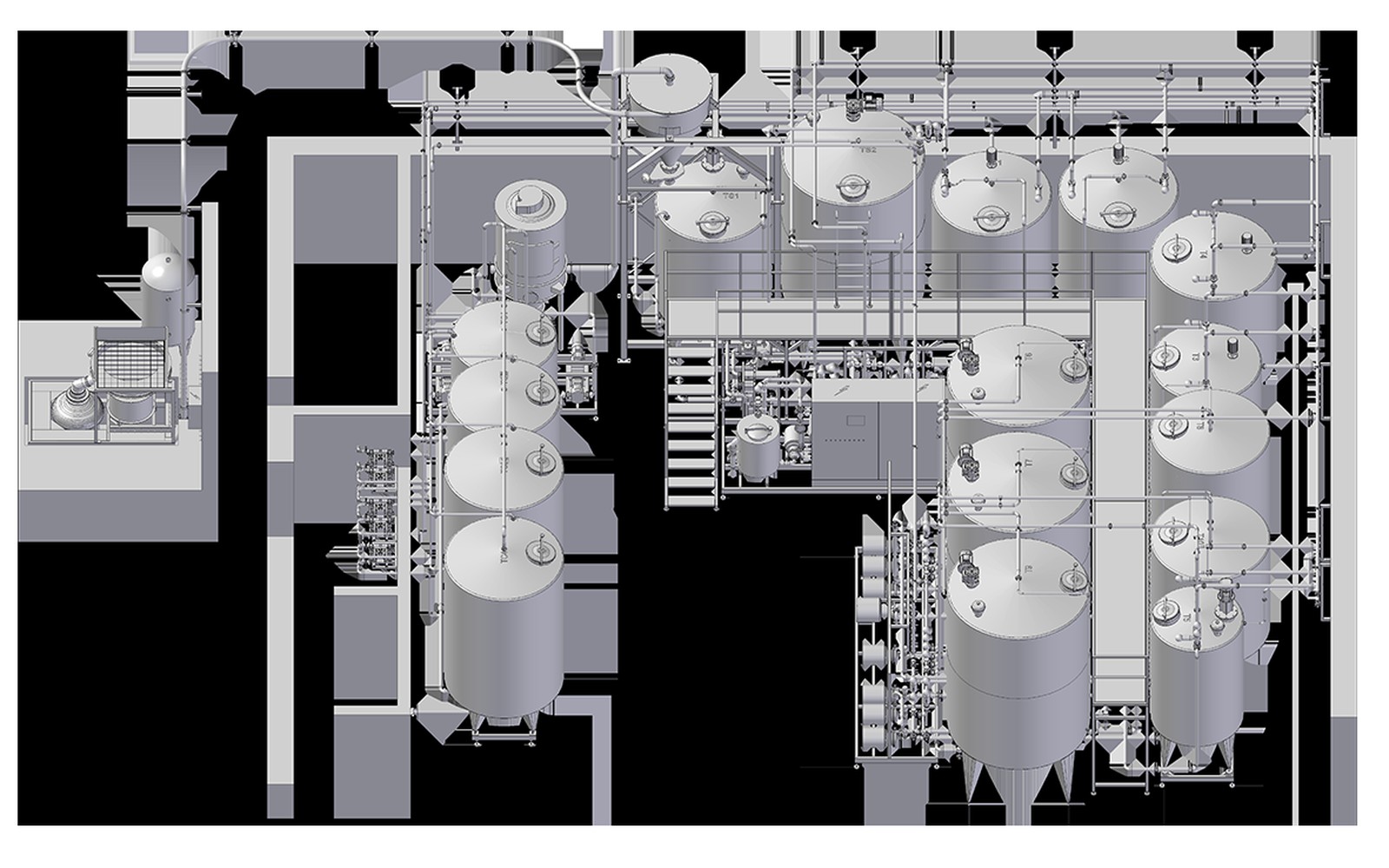
Homogenization is the defining processing step for both dairy and plant-based milk. A Homogenizer forces the product through a narrow valve under high pressure, breaking fat globules or plant-based particulates into uniformly small sizes that resist separation. Commercial homogenizers for mid-scale dairy or plant-milk production range from $30,000 for smaller models to $300,000 or more for high-capacity systems. The homogenizer is typically followed by pasteurization, which for dairy products is legally required and for plant-based milks is a practical shelf-life necessity.
A HTST pasteurization system handles high-acid and dairy products through a continuous flow process that heats and rapidly cools product to destroy pathogens without denaturing proteins excessively. For ambient-shelf plant milk, an aseptic filling system extends shelf life dramatically by filling pasteurized product into sterilized containers in a sterile environment, eliminating the need for refrigeration until opening. That extended shelf life opens up distribution channels and retail account types that chilled dairy products cannot reach.
- Homogenizers for fat and particle reduction
- HTST pasteurization systems
- Aseptic filling for ambient-shelf products
- Cold-fill and chilled bottling lines for refrigerated products
- CIP sanitation systems
- Walk-in and blast-chilling cold storage
Financing for Dairy and Plant-Milk Operations
Dairy and plant-milk equipment deals frequently exceed the application-only threshold of approximately $400,000, particularly when a full pasteurization and filling system is involved. For those transactions, we prepare a complete financial package and submit to multiple lenders who specialize in food and beverage manufacturing. The competitive submission process ensures the producer gets the best available terms rather than the first lender's offer.
For equipment additions under $400,000, application-only financing delivers a decision in 24 to 48 hours with no financial statements required. A dairy operation replacing an aging CIP system or a plant-milk brand adding a second homogenizer often falls in this range.
Dairy operations with strong retail or food service contracts, particularly those supplying institutional buyers with recurring purchase orders, have an underwriting story that lenders respect even when the business is relatively young. The contract revenue demonstrates demand certainty, which offsets some of the credit risk associated with a growing business.
Documentation and Credit for Dairy Producers
Dairy and plant-milk producers applying for equipment financing in the over-$400,000 range should expect to provide two to three years of tax returns, a current P&L and balance sheet, three to six months of bank statements, and a copy of the equipment purchase agreement or vendor quote. USDA facility certifications, organic certifications if applicable, and key retail or food service contracts are supporting documents that strengthen the application but are not always required.
Plant-milk brands that are still in startup phase, having launched within the past 18 months, approach the financing differently. Startup business financing for plant-milk equipment relies more on personal credit quality, the amount of equity already invested, and the credibility of the production and distribution plan. A brand that has secured a pilot purchase order from a regional retailer is in a meaningfully stronger position than one without any retail traction.
Refinancing and Sale-Leaseback for Dairy Operations
Established dairy operations, particularly those that have been running for ten or more years on originally purchased equipment, sometimes have significant unmonetized equity in their processing systems. A Sale-Leaseback converts that equipment equity into working capital. The homogenizer, the pasteurizer, and the filling line stay in place and in service; the cash goes to the business for expansion, debt reduction, or operational reserves.
Plant-milk brands that financed initial equipment under less favorable terms during an early growth phase sometimes revisit that debt once the business has matured. Equipment refinancing at a better rate or with a longer term to reduce monthly payments is a common optimization once a plant-milk brand has 24 to 36 months of solid performance behind it.
Related Financing Paths
Common Questions on Dairy and Plant-Milk Producers
Straight answers before you send the equipment file.
Can I finance a homogenizer and pasteurizer together as a single package?
Yes. Both assets can be bundled into one financed transaction. For a dairy or plant-milk operation, the homogenizer and pasteurizer work in sequence and are logically part of the same production system. One application covers both.
My oat milk brand has been operating for 14 months and has regional grocery placement. What financing is available?
With 14 months of history and active retail placement, you are past the startup stage in most lenders' eyes. Bank statements showing consistent revenue, the grocery purchase order or invoices, and the application form are typically enough for an application-only transaction. You are in a strong position to apply.
Does a certified organic dairy operation get any different financing treatment?
Organic certification does not directly improve or hurt financing terms, but it is a meaningful business narrative. Organic dairy commands premium pricing and tends to have strong demand visibility, which is a positive underwriting signal. Include it in the business description at application.
Can I finance an aseptic filling system for a plant-milk product that has ambient shelf life?
Yes. Aseptic filling systems are major capital assets and qualify fully for equipment financing. They are expensive, often $500,000 or more for commercial-scale systems, and the transaction will require financial documentation. The aseptic capability is a meaningful business differentiator that lenders in the food manufacturing space understand.
We are a small dairy operation and want to add a cream-top bottling line. Is $80,000 too small to finance?
Our minimum is $50,000, so an $80,000 bottling line addition qualifies. Application-only financing at that level is fast and simple. If you are also adding refrigeration or a CIP upgrade at the same time, bundle them together to simplify the process.
Ready to Finance Dairy and Plant-Milk Producers?
Send the equipment quote, seller, transaction size, and target timing. The financing desk will review the package and return a clear next step.