

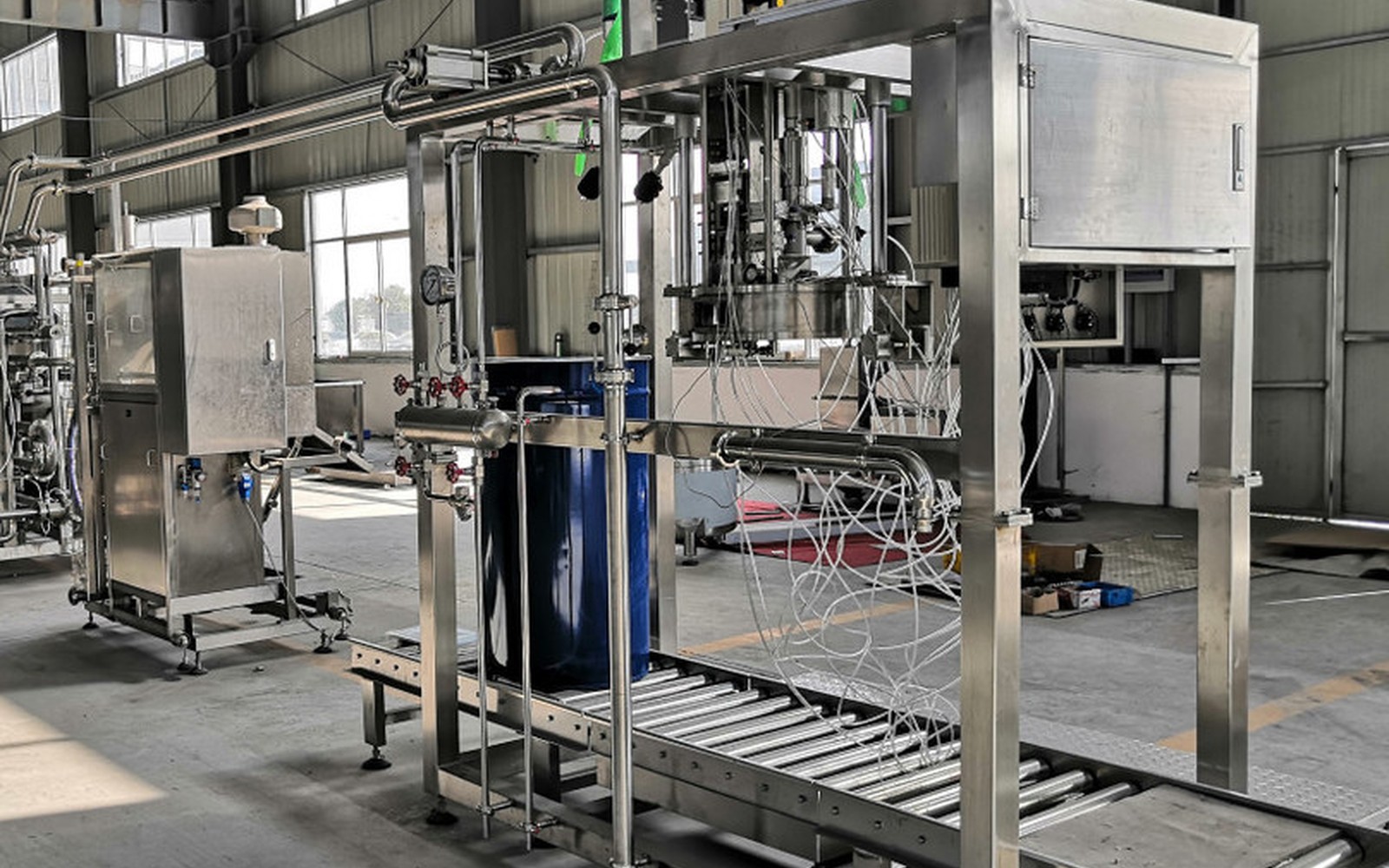
Aseptic Filling System
Finance a commercial aseptic filling system for juice, beverage, or functional drink production. From $50k, B/C credit considered, closing timed to the beverage-equipment package.
Shelf stability without refrigeration is a distribution unlock that changes the revenue model for a juice brand. An aseptic filling system, by sterilizing both the product and the container before filling in a sterile environment, produces a juice that can sit at room temperature for six months to over a year without preservatives. That shelf life is what gets a brand into a mass grocery chain, a club store, or international distribution, channels where cold-chain logistics would price the product out of reach.
Aseptic filling is capital-intensive. Entry-level commercial aseptic fillers for beverage applications start around $200,000 and scale into millions for high-throughput production lines. Most of our clients financing aseptic equipment are either established juice or beverage brands making the leap from refrigerated to shelf-stable, or beverage co-packers adding aseptic capability to serve clients who are outgrowing HPP or refrigerated distribution. We finance these transactions from $50,000, with large-scale aseptic system deals commonly landing between $250k and $750k, handled as structured full-documentation transactions.
How an Aseptic Filling System Works
Aseptic processing involves two parallel sterilization streams that come together at the fill point. The product stream runs through a continuous sterilization system, typically an HTST (high-temperature short-time) or UHT (ultra-high-temperature) heat exchanger that heats the juice to 135 to 150 degrees Celsius for a few seconds, then flash-cools it. This kills pathogenic organisms without the extended heat exposure of traditional retort processing, preserving more flavor and color.
The container stream runs its own sterilization path. For carton formats, hydrogen peroxide spray and UV light or hot air treatments sterilize the interior surfaces before filling. For bottles, a peracetic-acid rinse or hydrogen peroxide treatment is common. The sterile product and sterile container meet in a positive-pressure sterile filling zone where no outside air contacts the product during fill or seal.
Different container formats use different aseptic filler designs. Bag-in-box aseptic fillers for foodservice concentrate are simpler and less expensive than pouch or carton fillers. A pouch filling machine optimized for aseptic application requires a dedicated sterile-fill module, which adds $50,000 to $150,000 over a standard pouch filler. Carton aseptic systems from manufacturers like Tetra Pak are among the most recognized at retail, and their capital cost reflects their precision and output capacity.
- UHT processing heats product to 135-150C for 2-5 seconds, then flash-cools before filling
- Positive-pressure sterile fill zones prevent airborne contamination during fill and seal cycles
- Hydrogen peroxide or peracetic-acid container sterilization is standard for most bottle and pouch formats
- CIP and SIP (sterilize-in-place) cycles run automatically between production runs
What Transactions Qualify for Aseptic Equipment Financing
Because aseptic filling systems often exceed our standard application-only threshold of roughly $400,000, larger transactions require full financial documentation: business tax returns for the recent operating period, current financial statements, and a project narrative explaining how the aseptic capability changes the brand's distribution reach and revenue model. This is not unusual for seven-figure equipment; it is standard commercial-credit underwriting.
For transactions landing between $100k and $400k (aseptic bag-in-box fillers, smaller pouch aseptic modules), application-only terms with three months of bank statements apply. We can often close these in two to three weeks even for first-time applicants in the space.
Juice manufacturers upgrading from refrigerated cold-fill to aseptic, functional beverage startups launching an ambient-shelf product line, and beverage co-packers adding aseptic capability to their service mix all represent normal profiles. B and C credit are reviewed on the full file; large-ticket transactions with imperfect credit often require a stronger personal or corporate guarantee or additional collateral support.
Cost Structure and Financing Options
Equipment loans on aseptic systems typically run 60 to 84 months given the large transaction sizes. Longer terms keep monthly payments manageable while the production line ramps and the new distribution channel generates revenue. An equipment lease with a fair-market-value end-of-term option can make sense for brands that expect to upgrade to a higher-throughput system within five to seven years, preserving flexibility rather than committing to a 20-year asset ownership horizon.
For brands that already own HPP or other thermal processing equipment, a cash-out refinance on that equipment can generate capital toward the aseptic system down payment or installation costs. Aseptic systems often come with significant installation, commissioning, and qualification expenses that need to be in the budget alongside the equipment purchase price.
Discuss Aseptic Filling Financing
Large-format transactions like aseptic filling systems deserve a conversation before an application. Reach out with the equipment spec, vendor, and your current revenue picture. We will tell you quickly what the deal structure looks like and what documentation we will need to move forward.
Related Financing Paths
Common Questions on Aseptic Filling System
Straight answers before you send the equipment file.
Can I include installation and commissioning costs in the financing?
Soft costs like installation, commissioning, and operator training can sometimes be included in the financed amount if they are on the vendor invoice as part of a turnkey package. Standalone consulting costs or architect fees typically cannot be financed as part of an equipment transaction.
What is the difference between aseptic filling and HPP for extending shelf life?
HPP (high-pressure processing) uses cold high pressure to inactivate pathogens without heat, extending refrigerated shelf life to 60-90+ days. Aseptic filling uses heat sterilization plus a sterile fill environment to produce a product stable at room temperature for six months to over a year. Aseptic is typically used for ambient-shelf products; HPP is more common in the premium refrigerated segment.
Can I refinance my HPP machine to put capital toward an aseptic filler?
Yes. If the HPP equipment is in operating condition and under roughly ten years old, we can appraise it and structure a cash-out refinance. The proceeds go toward the aseptic project, and you make structured payments on the HPP equity.
My company is three years old. What financial documentation will you need for a $500,000 aseptic system?
At that ticket size we will need recent business tax filings, current financial statements (profit and loss plus balance sheet), and a business narrative. The application takes longer to underwrite, but deals in that range close regularly when the business fundamentals are solid.
Does aseptic equipment qualify for Section 179 or bonus depreciation?
Beverage production equipment generally qualifies for Section 179 and bonus depreciation in the year placed in service, subject to annual limits and your accountant's guidance. The full purchase price of the aseptic system, including installation as a capitalizable cost, typically forms the depreciable basis.
Ready to Finance Aseptic Filling System?
Send the equipment quote, seller, transaction size, and target timing. The financing desk will review the package and return a clear next step.