

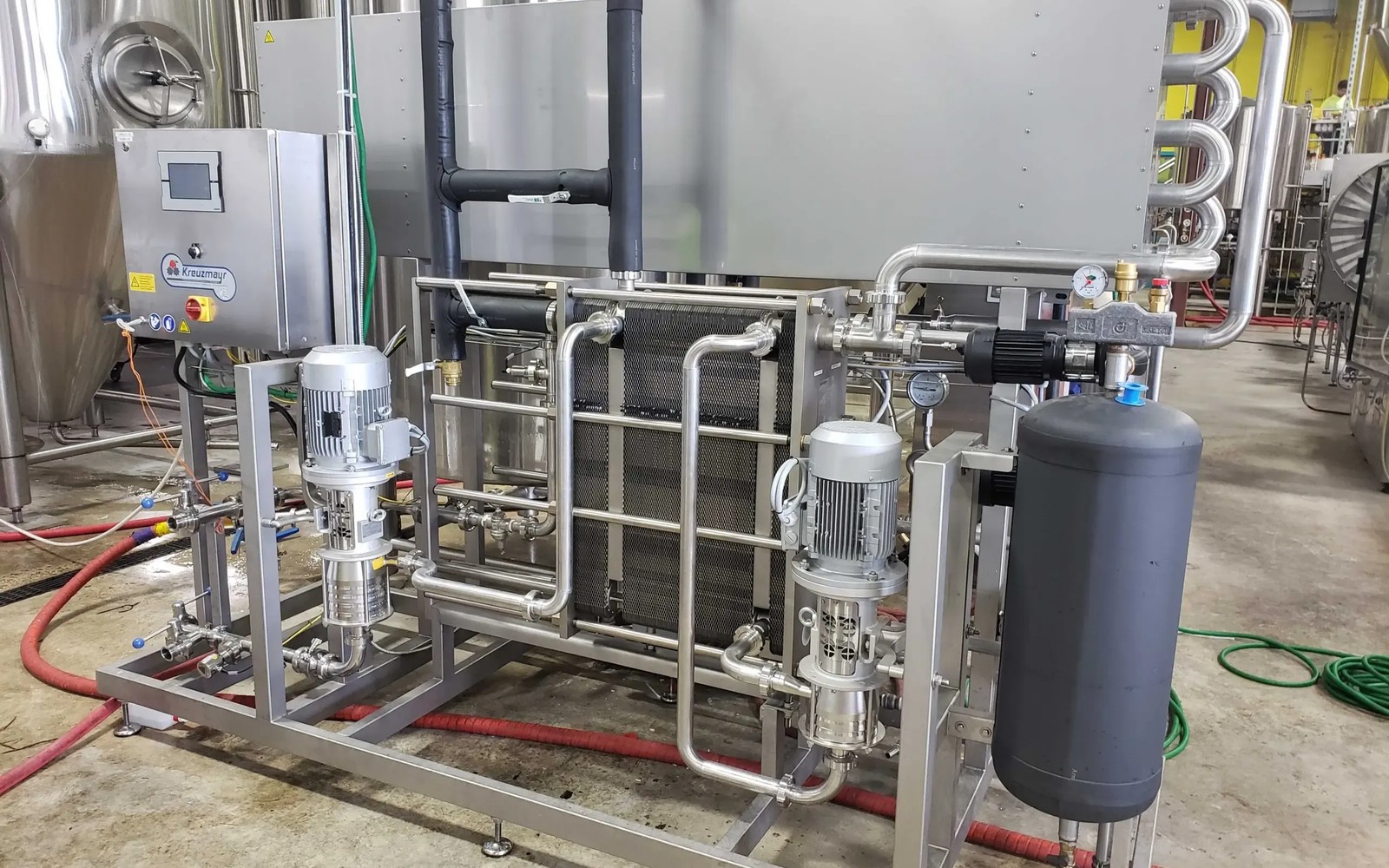
HTST Pasteurization System
Finance an HTST pasteurization system for continuous-flow juice and beverage production. Application-only up to ~$400k, closing timed to the beverage-equipment package.
High-temperature short-time pasteurization is the workhorse of continuous-flow beverage production. The principle is precise: heat the liquid to 72 degrees Celsius (161 degrees Fahrenheit) or higher for at least 15 seconds, then cool it rapidly before filling. That time-temperature combination achieves the pathogen reduction required by FDA regulations for juice and dairy products, and it does it without the extended heat exposure that destroys flavor and degrades nutrients the way older batch methods can. For a brand serious about throughput, quality, and regulatory compliance, an HTST system is a major capital commitment and a major competitive asset.
We finance HTST pasteurization systems for juice manufacturers, dairy-alternative producers, and high-volume beverage manufacturers that have outgrown batch pasteurization or are building a new production facility from the ground up. System costs start around $150,000 for simpler configurations and scale well past $1 million for multi-product lines with automated CIP, flow diversion valves, and integrated SCADA controls. We cover the full range.
What an HTST System Includes and Why It Matters
A complete HTST system is more than a heat exchanger. The standard configuration includes a balance tank (sometimes called a constant-level tank) to maintain steady flow into the system, a regenerator section that uses the hot outgoing product to pre-heat the incoming cold product for energy efficiency, a heating section that brings the liquid to the target temperature using hot water or steam, a holding tube sized to ensure every particle of liquid holds at temperature for the required dwell time, a flow diversion valve that automatically diverts product back to the balance tank if temperature drops below the critical limit, and a cooling section that chills the pasteurized product before it reaches the filler.
The FDA's 21 CFR Part 120 (Juice HACCP rule) mandates pasteurization or an equivalent 5-log reduction treatment for most commercially distributed juices. An HTST system with a validated time-temperature profile is the standard method for compliance in continuous-flow juice production. Manufacturers including GEA, Alfa Laval, and SPX FLOW are among the major suppliers of HTST systems for the beverage industry.
Flow rates on commercial HTST systems range from a few hundred gallons per hour for smaller installations to tens of thousands of gallons per hour for large plant operations. Choosing the right capacity matters for your capital planning because over-sizing an HTST is expensive and under-sizing forces you to run multiple shifts or invest in a second system sooner than expected.
What We Need to Finance an HTST System
HTST systems frequently exceed $400,000 as a total project, particularly when CIP integration, installation labor, and controls are included in the financed package. Above that threshold, our standard credit package applies: two years of business tax returns, recent financial statements, three months of bank statements, and an equipment invoice or quote. Below $400,000, we offer application-only financing that bypasses most of the document burden.
B and C credit businesses are considered. We do not require pristine credit history to approve a deal, and we look at the full business picture including revenue trends, collateral quality, and the operator's industry experience. New businesses and startups should expect to provide a stronger down payment and possibly a personal guarantee, but those situations are not automatic declines. Funding typically closes in about one to two weeks after approval, which keeps project schedules on track when you are waiting on capital to place an order with a vendor.
We also work well when the HTST system is being financed as part of a larger project that includes a CIP system or a filling line. Bundling related capital equipment into one transaction simplifies your financing and may allow a single set of terms rather than multiple loans running simultaneously.
Refinancing an Existing HTST System
Juice manufacturers and co-packers that already own an HTST system sometimes need capital for an adjacent investment, whether that is a second filler, a new warehouse, or a SKU expansion that requires working capital. A Sale-Leaseback on your existing HTST turns that capital equipment into liquidity without removing it from production. We purchase the system and lease it back to you on a scheduled payment basis, typically over 24 to 60 months. The line keeps running; you access the equity in the asset.
Equipment refinancing works similarly for operators who have a loan on the HTST and want to restructure the terms, extend the repayment period, or access any equity that has built up. Both options are worth exploring if you have significant capital tied up in production equipment and growth opportunities that need funding now rather than in three years when the loan pays off.
Get Financing for Your HTST System
Share the system spec, your target throughput, and the vendor or installer quote. We will structure financing that fits the total project cost, not just the heat exchanger itself. HTST is a long-term capital asset, and the payment should be structured to match what it delivers to your operation over time. Submit your quote request and we will respond within one business day.
Related Financing Paths
Common Questions on HTST Pasteurization System
Straight answers before you send the equipment file.
Can I finance installation and controls along with the HTST unit itself?
Yes. Installation, electrical controls, and SCADA integration can be included in the financed package when they are part of the same project and on the same vendor or contractor invoice. Soft costs like installation are typically capped at a percentage of the hard equipment cost, but they can often be included.
Does the HTST need to meet specific regulatory specs to qualify for financing?
We do not audit your regulatory compliance as part of the financing decision. However, the equipment value and your ability to use it commercially as collateral matters to us. A system built to FDA 21 CFR Part 120 specifications that is operational and documented has clear commercial value, which supports the loan.
I am building a new facility and do not have revenue history yet. Can I still finance an HTST system?
Startups and pre-revenue businesses are considered through our startup financing program. Lenders typically want a meaningful down payment and a personal guarantee for new-build projects without operating history. We can discuss what that looks like for your specific situation.
Can I refinance my HTST if it still has a loan on it?
Yes, as long as there is equity in the system (meaning the market value exceeds the payoff balance), refinancing is possible. We can pay off the existing lender and restructure the remaining amount into new terms, potentially with cash out if the equity supports it.
How is an HTST system different from a pasteurizer in financing terms?
The financing mechanics are the same. The distinction is the equipment configuration: HTST is a specific continuous-flow method, while a generic Pasteurizer covers batch and tunnel types as well. Both are financed as durable production equipment on the same general terms.
Ready to Finance HTST Pasteurization System?
Send the equipment quote, seller, transaction size, and target timing. The financing desk will review the package and return a clear next step.