Reverse-Osmosis Water System
Finance an RO water system for your juice or beverage production facility. Pure process water, application-only to ~$400k, closing timed to the beverage-equipment package.
Water is your primary ingredient. It shows up in your juice as the diluent in concentrates, the reconstitution liquid in powdered blends, the rinse in CIP cycles, and the primary component in still and sparkling water products. What the water brings with it, including chlorine, total dissolved solids, hardness minerals, and microorganisms, goes straight into your product or your equipment. Municipal water treatment improves safety but was not designed for beverage production consistency, and well water can vary by the season. A reverse-osmosis system gives you a controlled, repeatable water quality that your formulations can depend on.
We finance reverse-osmosis water systems for juice brands, beverage manufacturers, bottled water companies, and any production operation where incoming water quality affects product consistency or equipment longevity. Commercial RO systems for food and beverage production range from small skid-mounted units producing 5,000 to 15,000 gallons per day to large industrial systems producing hundreds of thousands of gallons per day. Pricing for production-grade commercial systems typically starts around $20,000 for smaller skid units and scales to $200,000 or more for high-flow systems with pre-filtration, post-treatment, and storage. Many projects with supporting infrastructure exceed $50,000, where our financing starts.
What a Commercial RO System for Beverage Production Includes
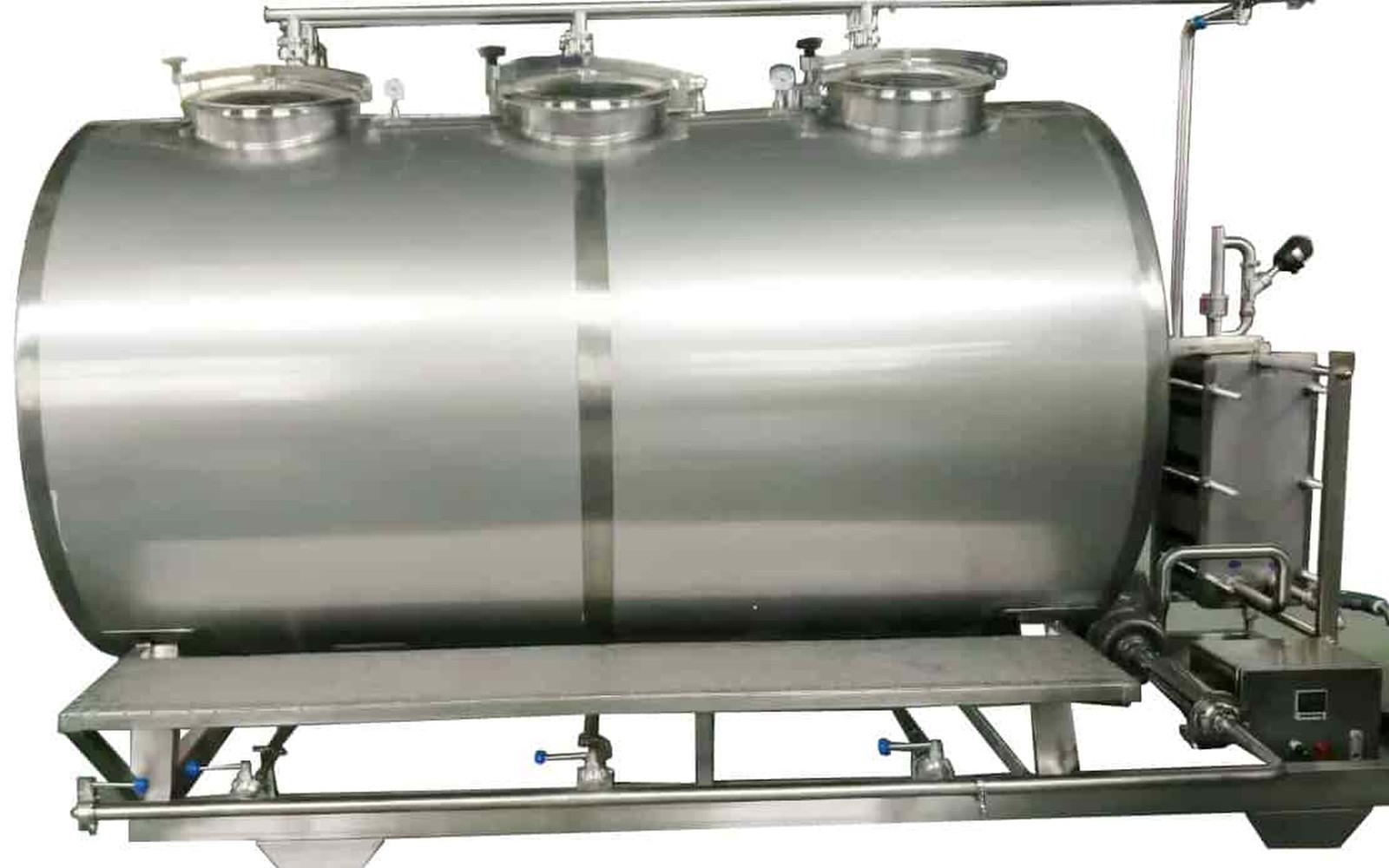
A commercial reverse-osmosis system is a multi-stage treatment train rather than a single filter. The typical beverage-grade RO installation starts with a pre-filtration stage, usually a sediment filter and a carbon block or activated carbon filter to remove particulates and chlorine that would damage the RO membranes. The water then passes under pressure through RO membranes, which reject dissolved solids, minerals, bacteria, and many contaminants, producing a permeate (purified water) and a concentrate (reject stream that carries the removed contaminants to drain).
Post-treatment often includes UV sterilization to address any microbial content that passed the membrane, and in some cases a remineralization stage to add back specific minerals for taste or product specification. For sparkling water products, the RO permeate goes directly into the carbonation system. For juice reconstitution, it is the diluent. For CIP systems, RO water is often used in the final rinse to prevent mineral spotting and deposit buildup on contact surfaces.
System sizing is critical. An RO system that cannot keep up with production demand becomes a bottleneck. RO recovery rates (the percentage of incoming water that becomes permeate rather than reject) vary by system design and incoming water quality. Standard commercial systems run 50 to 75 percent recovery. High-recovery systems can approach 85 percent, reducing water waste, which matters both for operating cost and for water-constrained locations.
Why Beverage Producers Invest in On-Site RO
Purchasing purified water from a supplier adds cost and introduces supply risk. Relying on municipal tap water for production introduces variability: total dissolved solids, hardness, and disinfectant levels change seasonally and can change with municipal infrastructure work. Either way, outsourcing your water quality means something outside your control can affect your product. On-site RO eliminates both problems. You control the input water quality to a consistent specification, and you eliminate the per-gallon cost of purchased purified water at production volumes.
For juice manufacturers working with concentrate reconstitution, the ratio of juice solids to water determines your Brix and your flavor profile. Inconsistent water TDS from the tap translates to inconsistent product without changing your recipe. An RO system gives your reconstituted juice a consistent starting point that your QA testing can validate batch after batch.
Retail buyers for major grocery chains run their own food safety audits, and documented process water quality is typically part of those audits. An on-site RO system with logged quality records (TDS, conductivity, microbial testing results) is a cleaner audit presentation than a reliance on municipal water that you do not test incoming. For brands working toward SQF, BRC, or similar food safety certification, water quality documentation is a standard component of the program.
Financing an RO System
Commercial RO systems that meet our $50,000 minimum are typically complete skid-mounted installations with pre-filtration, membranes, controls, and a storage tank. For projects in this range, our application-only program requires three months of bank statements and the equipment quote. Larger systems or complete water treatment room installations go through a standard credit review. Terms run 36 to 60 months on most RO deals.
We finance new RO systems from commercial suppliers and also used systems where a facility is upgrading to higher capacity. RO membranes are a consumable item (replaced typically every two to three years), so the age of a used system matters differently than with other equipment. A used RO skid with fresh membranes and a valid warranty on those membranes is a solid financing target. You can also combine RO financing with a loan or lease on related water treatment equipment, including softeners, storage tanks, and UV sterilizers, in a single bundled transaction.
Get RO System Financing
Send us your current water source, your target daily production volume, and the system quote you are working with. We will structure the financing and respond within 24 hours. Consistent water in means consistent product out, and the financing is what makes it practical to bring that control in-house rather than managing it around the edges. Submit your request and we will be in touch quickly.
Related Financing Paths
Common Questions on Reverse-Osmosis Water System
Straight answers before you send the equipment file.
Can I finance an RO system together with a storage tank and UV sterilizer as one deal?
Yes. The complete water treatment installation, including pre-filters, the RO skid, a product water storage tank, and a UV sterilizer downstream, can be combined into one financing package. We treat the complete system as the collateral.
RO membrane replacement is a regular maintenance cost. Can that be included in financing?
Membrane replacements are consumable operating costs, not capital equipment, and generally cannot be rolled into equipment financing. What you finance is the hardware system itself. Membrane replacement cost should be factored into your operating budget separately.
Is an RO system eligible for Section 179 deduction?
A commercial RO system installed as production equipment in your facility is generally eligible for Section 179 deduction in the year it is placed in service. Confirm with your tax advisor. An equipment loan (ownership from day one) is typically required for the deduction rather than a lease. We can point you to our Section 179 financing page for more context.
My facility uses a well rather than municipal water. Does that affect financing?
No. The water source does not affect the financing decision. We are financing the RO equipment as a business asset, and the well water scenario actually strengthens the business case for on-site treatment, which supports the capital justification.
Can I refinance an RO system I already own to get working capital?
Yes, if the system has sufficient value and is free of liens. A sale-leaseback lets you extract the equity in the system as a lump-sum payment while the equipment stays in your facility. This option works particularly well for large, high-value RO installations that represent significant sunk capital.
Ready to Finance Reverse-Osmosis Water System?
Send the equipment quote, seller, transaction size, and target timing. The financing desk will review the package and return a clear next step.