Clean-in-Place (CIP) System
Finance a clean-in-place (CIP) system for your juice, beverage, or dairy production facility. Sanitation compliance, fast approval, flexible terms.
Product changes between batches cost you either time or risk, and the CIP system is what determines which one you pay. Without a clean-in-place system, sanitation between runs means manually disassembling pipe sections, tanks, and filler heads, cleaning them by hand, and reassembling before you can run the next product. That takes hours and introduces human error at every step. A CIP system automates the sequence: rinse, detergent wash, rinse, sanitize, rinse, with the cleaning solutions circulating at the right temperature, concentration, and velocity through your product contact surfaces without any disassembly. The equipment cleans itself while your team prepares for the next batch.
We finance CIP systems for juice brands, juice manufacturers, beverage co-packers, and production facilities of all scales that need defensible sanitation documentation alongside the capability to run faster changeovers. CIP system cost ranges from $30,000 to $40,000 for a basic single-tank unit for a small production line to $300,000 to $600,000 or more for a multi-tank, multi-circuit system serving a full plant. Our financing starts at $50,000 and covers that full range.
CIP System Configurations for Juice and Beverage Facilities
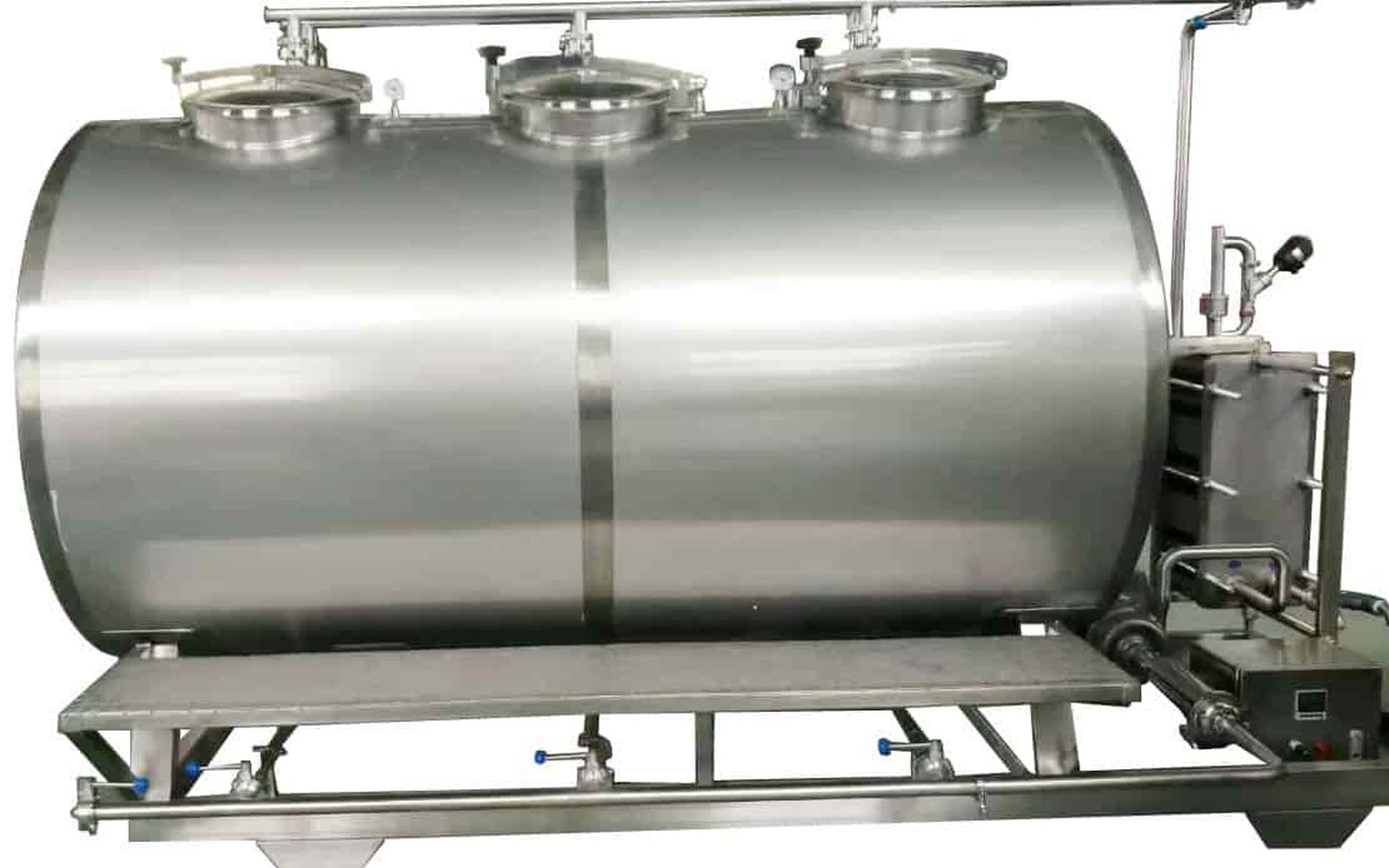
A basic CIP system includes a supply tank for holding cleaning solutions, a return tank that collects the circulated solution after the cleaning cycle, a pump that circulates the solutions through the lines at sufficient velocity to achieve turbulent flow (typically above 5 feet per second in pipes), and a heat exchanger or direct-injection steam heater to bring the detergent solution to the target cleaning temperature. Controls range from simple timer-based panels to fully automated PLC-driven systems with recipe management and logging that record every cleaning cycle with time, temperature, and chemical concentration data.
Multi-circuit CIP systems serve multiple pieces of equipment simultaneously or in sequence without a manual reconnection step. A system with three or four circuits can clean a product line, a tank farm, and a filler in parallel, dramatically reducing the total downtime between production runs. These are standard in mid-to-large beverage plants. Single-circuit systems serve one cleaning loop at a time and are appropriate for smaller operations or facilities with simpler equipment layouts.
The CIP system works closely with the jacketed batch tanks and blending tanks in your plant, which must be equipped with CIP spray balls or spray nozzles to allow the cleaning solution to reach all internal surfaces without manual access. If your tanks were not built with CIP connections, that is a retrofit project that can also be financed alongside the CIP system itself. We finance the complete installation, including the CIP skid, the spray assemblies, and the piping that connects the system to your equipment.
Why CIP Is a Compliance and Efficiency Investment
The FDA's Juice HACCP regulation (21 CFR Part 120) requires juice processors to implement a HACCP plan that includes sanitation controls for all product contact surfaces. A CIP system with logged cycle data provides the documented evidence that your sanitation procedures were executed correctly and that the parameters were met. Manual cleaning produces no log. For brands working toward SQF certification, FDA registration, or co-manufacturing contracts that require audit-ready sanitation records, a CIP system is not a luxury; it is part of the compliance infrastructure.
Beyond compliance, the efficiency math is straightforward. A manual sanitation process that takes three hours between products, plus the time to disassemble and reassemble, represents significant lost production capacity over a year. An automated CIP cycle that runs in 45 to 90 minutes while the equipment stays in place recovers that time for productive use. At commercial production volumes, the cost of the CIP system can be justified on efficiency alone, before counting the reduction in sanitation chemical waste and the elimination of human error in cleaning procedures.
Co-packing operations have particularly strong incentive to invest in CIP. A co-packer serving multiple clients with different products needs to prove to each client that the equipment is free of the previous client's product before their run begins. CIP log data that shows time, temperature, and chemical concentration for every cleaning cycle is the documentation that supports those contracts and audits.
Financing Your CIP System
For CIP systems landing between $50k and $400k, our application-only process requires three months of bank statements and an equipment quote. No tax returns. Decisions come back within two to three business days for straightforward applications. Larger multi-circuit systems for full plants go through a standard credit review, but the process is still efficient and the timeline to close is measured in weeks rather than months.
We finance CIP systems as equipment loans or leases, bundled with related production equipment or standalone. B and C credit operators are considered. We also finance used CIP equipment from equipment dealers or food and beverage facility closures; used CIP skids from established manufacturers hold value and the financing structure is the same as for new units. Terms on CIP financing typically run 36 to 60 months, matching the useful life of the primary system components.
Related Financing Paths
Common Questions on Clean-in-Place (CIP) System
Straight answers before you send the equipment file.
Can I finance the CIP installation, including piping to my existing tanks, along with the CIP skid itself?
Yes. Installation costs that are part of a single vendor or contractor quote can typically be included in the financing package. We look at the total project scope and try to bundle it into one transaction rather than splitting it into separate loans for equipment and installation.
My current tanks do not have CIP spray balls. Can I finance retrofitting them at the same time as the CIP system?
Yes. Retrofitting existing tanks with CIP spray assemblies and adding the return piping back to the CIP skid are part of the total project, and those costs can be included in the financed amount when they are on the same project invoice.
How do lenders view a CIP system as collateral? Is it hard to value?
CIP systems from established manufacturers (APV, Alfa Laval, GEA, custom fabricators) have a solid secondary market because every food and beverage facility with product-contact equipment needs sanitation capability. They are not the most liquid collateral in the world, but they are not difficult to value either. Larger, more automated systems with recent controls are easier to resell.
Does my CIP system need to meet specific regulatory specs to qualify for financing?
We do not audit equipment regulatory compliance as part of underwriting. However, a system that is built to food-grade sanitary standards and has a clear commercial application has better collateral value than makeshift equipment. We finance commercially appropriate equipment; we do not police the spec.
I am a startup still building my first production line. Can I get CIP financing approved before I have much revenue history?
Yes, through our startup financing program. Pre-revenue or early-revenue businesses typically need a stronger down payment and a personal guarantee, but the deal can still be structured. A well-developed business plan and a clear equipment application help the underwriting case considerably.
Ready to Finance Clean-in-Place (CIP) System?
Send the equipment quote, seller, transaction size, and target timing. The financing desk will review the package and return a clear next step.