GEA Financing
Finance GEA homogenizers, separators, and beverage processing systems. Large-scale food processing equipment financing with competitive terms and fast.
Texture and particle distribution determine how a juice or functional beverage performs on the shelf, in the mouth, and in the retail buyer's re-order decision. GEA builds the equipment that controls those variables at industrial scale. Their homogenizers, separators, heat exchangers, and spray drying systems are used across the food and beverage processing industry to produce consistent, high-quality products at the volumes that make commercial distribution viable. For a juice manufacturer upgrading from small-batch production to continuous industrial processing, GEA equipment often represents the step that makes retail-ready quality achievable at the throughput a distribution contract actually requires. That is a meaningful capital decision, and we finance it with that context in mind.
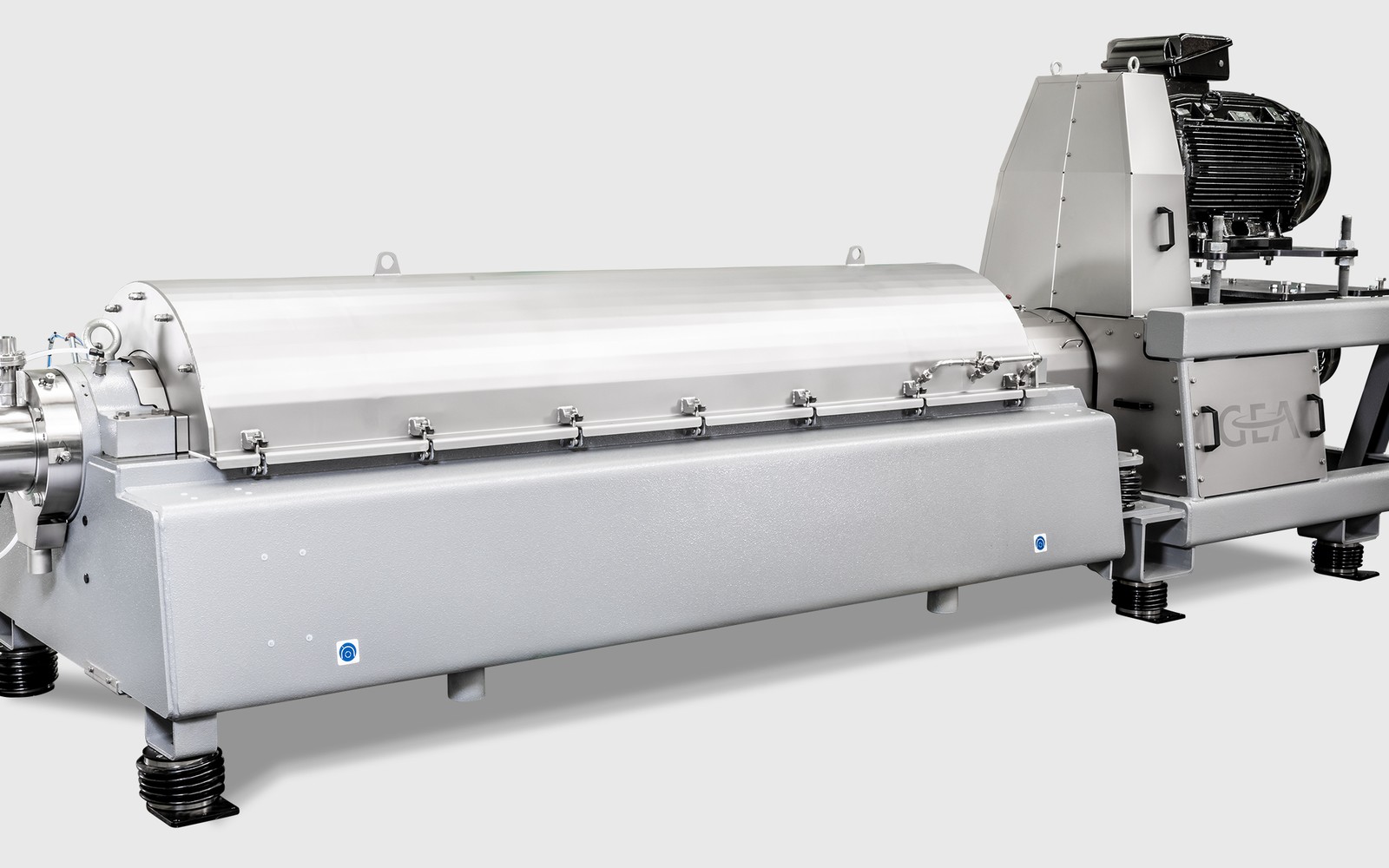
GEA Group is a German-headquartered industrial company and one of the largest suppliers of process technology to the food and beverage industry worldwide. Their Ariete homogenizer series is particularly relevant for juice and beverage manufacturers, delivering consistent particle size reduction and product stabilization that affects shelf life, mouthfeel, and visual appeal. A homogenized juice or plant-based beverage that does not separate in the bottle is a fundamentally more commercially viable product than one that requires shaking, and the GEA Ariete homogenizer is the asset that delivers that consistency at production scale.
GEA Equipment Lines Relevant to Juice and Beverage Producers
Beyond the Ariete homogenizer, GEA manufactures a range of process equipment that integrates into juice and beverage production lines. Their centrifuge and separator technology is used for juice clarification, removing pulp and sediment to produce clear juice products. Their plate heat exchangers and pasteurization systems address shelf stability. Their spray dryers convert liquid juice concentrates into powder form for food ingredient applications. Each of these product categories sits in a different part of the production workflow, and a juice manufacturer scaling into full industrial processing may need several GEA systems across the line.
We finance GEA equipment as standalone purchases and as part of broader production line packages. A juice manufacturer who is specifying a complete facility might pair GEA homogenization and separation equipment with a Krones filling line, a Hiperbaric HPP unit for cold-press shelf-life extension, and a CIP system. We can structure the financing to cover the GEA equipment as a standalone deal or bundle it into a single larger financing arrangement that covers the full production floor. The decision on how to structure it depends on the total project cost, the timeline of equipment delivery, and the credit profile of the business.
GEA equipment typically enters our financing conversations at deal sizes that require full documentation. These are not application-only purchases. A GEA Ariete homogenizer or separator installation for an industrial juice facility represents a substantial capital commitment, and the financing package needs to reflect that with tax returns, financial statements, bank statements, and a production plan that demonstrates how the equipment fits into the business's revenue model.
GEA Buyers We Work With
The primary GEA buyers we finance are juice manufacturers operating at mid to large scale, where production consistency and shelf stability are non-negotiable requirements for their retail and foodservice customers. These businesses have multi-year operating histories, established distribution relationships, and a clear production need that the GEA equipment addresses. They are not buying on speculation; they are buying because a production contract, a retail buyer's quality standards, or a facility expansion plan has created a concrete requirement for the capability the equipment provides.
We also work with dairy and plant-milk producers who use GEA homogenization and separation equipment for their products. The plant-based beverage category has driven significant investment in GEA homogenization technology as brands producing oat milk, almond milk, and pea protein beverages need to achieve smooth, shelf-stable consistency that holds up through retail. These producers often have strong growth trajectories and clear production rationale, which makes for strong financing applications even when the business is relatively young in absolute terms.
Functional beverage companies producing shots, wellness tonics, or nutrient-dense drinks that require precise particle distribution and consistent emulsification are a growing buyer category as well. The functional beverage startup that has achieved proof-of-concept at small scale and is moving to production-scale equipment is exactly the kind of business that benefits from financing a GEA homogenizer rather than purchasing it outright.
Financing Terms and Deal Structure for GEA Equipment
GEA equipment for industrial juice production typically enters financing conversations at several hundred thousand dollars, and full production line configurations can extend into seven figures. For this range, we work with specialized food processing lenders who understand the asset category, know the resale market, and can evaluate a GEA deal on the merits rather than fitting it into a generic equipment loan template. Terms for large GEA installations can run to 84 months, which meaningfully reduces monthly debt service and allows the business to grow into the equipment's full capacity over time rather than being pressured by payments from day one.
A conventional equipment loan is the most common structure for GEA purchases where the operator plans to own the equipment long-term. A financial lease with a dollar-buyout option is available for operations with different tax or accounting preferences. And for businesses considering a facility expansion that involves both GEA equipment and other processing systems from other suppliers, a Sale-Leaseback on an existing paid-off asset can free up capital for the new GEA purchase without requiring additional debt on the business's balance sheet.
Related Financing Paths
Common Questions on GEA Financing
Straight answers before you send the equipment file.
Can GEA equipment purchased from a European distributor be financed in the US?
Yes, with appropriate documentation. Equipment purchased from international suppliers requires a purchase contract, import documentation, and confirmation of US installation. Funding is typically held until the equipment has cleared customs and is confirmed at the US facility. We plan the financing timeline around the import schedule so there are no gaps between purchase commitment and funding availability.
We are a plant-milk startup with two years of revenue. Can we finance a GEA homogenizer?
Two years of revenue with a growing trajectory is a workable profile for a GEA deal at the right size and with the right credit profile. We look at the full picture: revenue growth, personal credit, the specific GEA equipment, and any supporting contracts or purchase orders. A startup that has validated product-market fit and is investing in scale equipment to meet proven demand is a meaningful application, not a speculative one.
How is residual value on GEA equipment assessed for financing or refinancing purposes?
GEA industrial processing equipment generally holds value well due to its build quality and the specialized nature of the market it serves. Residual value is assessed based on equipment age, model, maintenance history, and current secondary market conditions. A recent third-party appraisal from a firm familiar with food processing equipment is the most reliable basis for a refinancing or sale-leaseback conversation.
Can commissioning and integration services be included in the financed amount?
Some commissioning and integration costs can be included, typically up to a percentage of the equipment cost depending on the lender. Full facility construction and civil work is generally not includable. GEA commissioning services billed directly from GEA or an authorized integrator have a better chance of being included than general contractor work. We review the full vendor quote and advise on what can be bundled.
Is there a minimum deal size for GEA financing?
Our minimum is $50,000. GEA industrial processing equipment almost always exceeds that threshold. The more relevant question for GEA deals is the documentation and underwriting requirement, which scales with deal size. For very large purchases, we build the most complete application package possible from the start to avoid delays.
Ready to Finance GEA Financing?
Send the equipment quote, seller, transaction size, and target timing. The financing desk will review the package and return a clear next step.