Urschel Financing
Finance Urschel cutting, dicing, slicing, and comminuting machines for juice and beverage ingredient prep. $50k minimum, application-only to ~$400k, funding in.
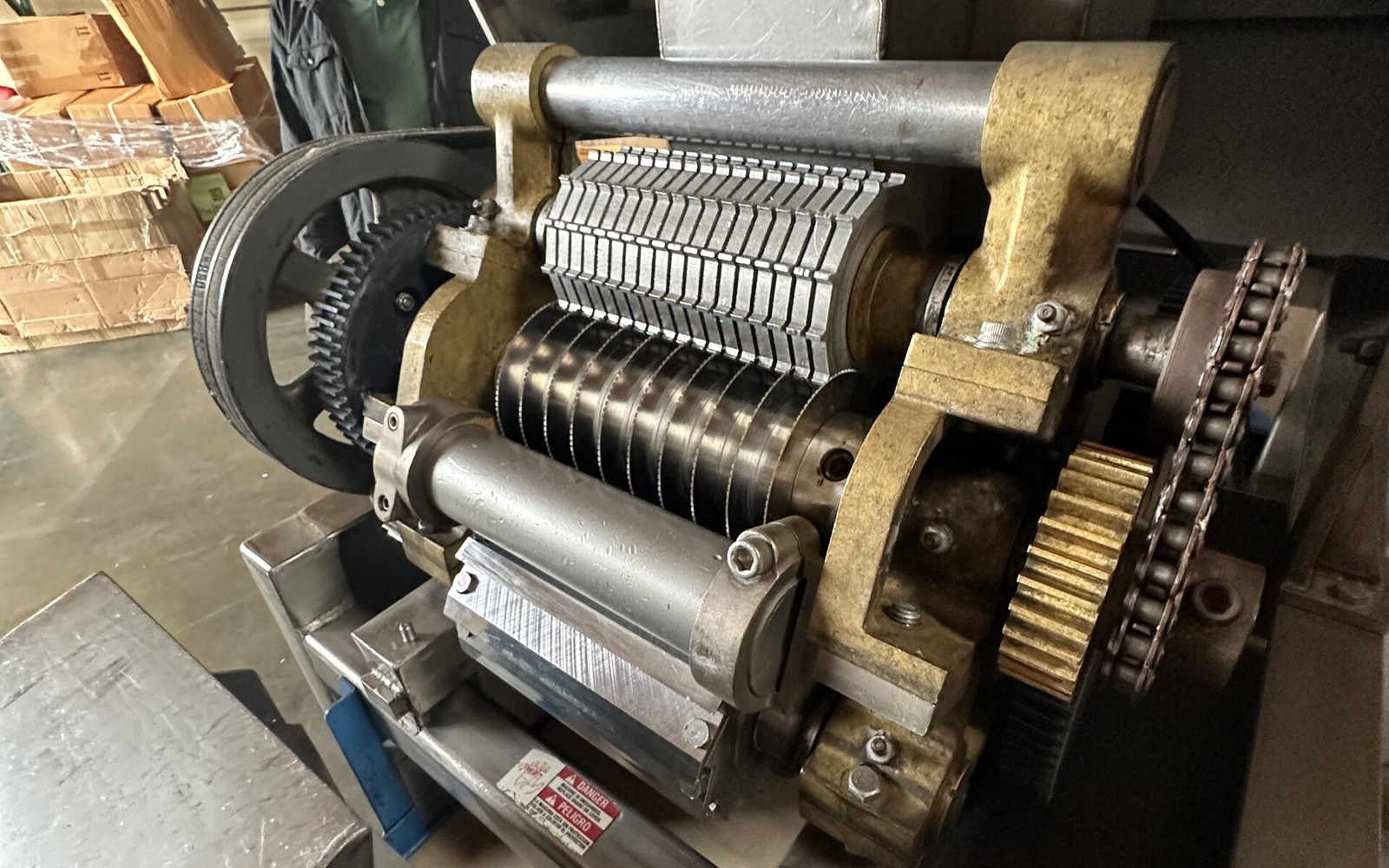
Urschel Laboratories has built a reputation as the precision cutting and size-reduction specialist for food manufacturing. Their machines appear throughout the juice, beverage, and ingredient-prep world, handling everything from pre-press fruit preparation to high-volume vegetable comminution for cold-pressed blends. The reason producers keep coming back to Urschel is throughput consistency: the machines are engineered to produce uniform particle sizes at rates that feed high-speed juice lines without creating the bottleneck upstream that kills overall yield per shift.
Urschel's product line is not cheap, and it does not need to be. A well-maintained Urschel machine runs for many years with predictable blade replacement as the main maintenance cost, so the total cost of ownership spread across production volume is often lower than alternatives that cost less upfront but wear out faster. Financing an Urschel purchase preserves your cash for the ingredients, packaging, and distribution costs that turn raw produce into a batch on a store shelf. We work with juice producers, beverage manufacturers, and ingredient processors who need Urschel capacity funded without draining working capital.
Urschel Product Lines Relevant to Juice and Beverage
Urschel's machines are organized around cutting and size-reduction tasks. The Comitrol series handles wet and semi-wet product comminution, reducing fruits and vegetables to the particle size required before juice extraction. This is particularly relevant for producers running cold press at scale who need produce broken down upstream to improve yield through the press. The CC series and TranSlicer models are designed for slicing and strip cutting vegetables and fruit in high-throughput configurations.
For beverage ingredient applications, Urschel's Model G and Urschel Crosscut Slicer handle dense root vegetables and fibrous produce that would jam lighter-duty prep equipment. Many producers juicing ginger, turmeric, beet, and other dense ingredients rely on these machines upstream of the actual juice press. The downstream result is better yield from the press, less blade wear on the extraction equipment, and faster throughput per shift.
Prices on Urschel equipment vary considerably. Smaller models come in under $30,000, but the high-capacity, fully automatic configurations used by serious juice production operations typically range from $60,000 to well over $200,000 depending on model and configuration. A typical Urschel purchase we see in our pipeline is between $75,000 and $175,000, comfortably within the application-only financing range. These machines pair logically with upstream fruit and vegetable washing lines and downstream commercial cold-press juicers.
What Qualifies for Urschel Financing
We finance new Urschel equipment purchased through authorized distributors, used machines from dealers and private parties, and refurbished units coming off lease or from other food manufacturers. The minimum transaction we consider is $50,000, which means standalone small Urschel models may fall below our threshold unless bundled with installation, tooling, or other associated equipment on the same invoice.
Businesses that qualify range from growing juice brands with two or more years in operation and clear revenue history, to food-ingredient processors that supply juice manufacturers as B2B customers. We also work with startup producers who have a strong founding team, a co-packing agreement, or retail commitments in place, even if the business itself is under two years old. Those situations may require additional documentation but are not automatic declines.
Credit profiles we consider include prime borrowers with clean history and B/C borrowers with rougher history but strong cash flow or equipment equity. The machine itself is collateral, and Urschel equipment is well-regarded by equipment finance lenders because of its resale value and recognized brand in the food manufacturing sector. That factor alone helps marginal credits get a deal done that might not work on a lesser-known brand of prep equipment. Bad-credit equipment financing is available for businesses where the credit history is imperfect but the business fundamentals support the payment.
Term, Rate, and Structure on Urschel Deals
Urschel equipment typically qualifies for terms between 36 and 72 months. The longer the term, the lower the monthly payment, which for a $150,000 machine can mean the difference between a payment that fits comfortably inside daily batch revenue and one that requires strong months to cover. We try to match the term to the useful life of the asset: since Urschel machines run reliably for a decade or more with proper maintenance, 60-month terms are common and 72-month terms are available for well-qualified buyers.
Structure choices include a standard equipment loan, which keeps the machine on your balance sheet and allows full depreciation under Section 179 or bonus depreciation rules, or a true lease with a buyout at end of term. Juice producers making capital equipment decisions around tax year are often interested in the Section 179 financing angle, since a $150,000 Urschel purchase financed entirely in the purchase year can carry a meaningful deduction against income. We can structure the deal to support either approach.
For buyers who want to add an Urschel to a prep line they are building from scratch, we can often wrap the whole prep station, including the washing line, the Urschel, and installation costs, into a single transaction. That way one application, one approval, and one monthly payment cover the full upstream production block.
Financing the Whole Prep Line, Not Just the Urschel
Urschel is almost always one piece of a larger prep and extraction workflow. Juice manufacturers who are investing in Urschel capacity are usually also investing in the washing and sanitizing station upstream, the peeling equipment for products like carrot and beet, and the extraction system downstream. We can finance all of it together, including equipment from multiple vendors on the same transaction, as long as the total is above our minimum and the business qualifies.
Producers using Urschel in a juice production workflow that also includes HPP treatment for shelf-life extension will often be financing several capital assets close together in time. We can close each as a standalone transaction or, if the timing lines up, combine them. Talk to us early in the planning phase so we can help structure the capital stack efficiently across the whole line build-out rather than solving each piece reactively. Linking an Urschel prep station purchase to the broader juice production line investment is one way to think about the total capital requirement before committing to any single machine purchase.
Brands that also need downstream finishing equipment, like peeling and cutting machines and separate extraction hardware, will find that financing the full prep workflow as one block often results in a simpler application and better overall terms than financing each piece separately as it arrives.
Start Your Urschel Financing Application
Give us the model number, the total invoice amount, and whether you are buying new or used. We come back with structure options fast, typically within one business day, and fund within one to two weeks of approval. Your prep line does not need to wait on a slow capital process.
Can I bundle my Urschel purchase with other prep equipment on one financing application?
Yes. If you are buying a washing line, a cutting machine, and other prep station equipment at the same time, we can include all of it in one transaction as long as the total is above $50,000 and the equipment is on the same purchase plan. One application, one approval, one monthly payment.
Urschel discontinued the specific model I want. Can I still finance a used one?
Yes. We finance used Urschel regardless of whether the model is current in their catalog. What matters is the machine's condition and market value, not whether Urschel is still producing it. Parts availability for the model is worth checking before purchase, but the financing itself is not affected by model status.
I want to use Section 179 to write off the Urschel this year. Does the financing structure affect that?
It depends on the structure. A loan or dollar-buyout lease typically qualifies the asset for Section 179 in the year placed in service. A true fair-market-value lease may be treated as an operating expense instead. We can structure either way depending on your tax strategy. Talk to your CPA, and tell us which path they recommend so we set up the right structure from the start.
What if my business is seasonal and cash flow is uneven across the year?
We have deferred-start and skip-payment structures that can align payments with the producing season. A juice brand with strong Q2 and Q3 volume but thin Q1 cash flow can sometimes structure a payment schedule that reflects that reality. Ask us about seasonal structures when you apply.
How does Urschel equipment value compare to other brands as collateral?
Urschel holds value very well in the food equipment secondary market. Their machines are recognizable, parts-supported, and in steady demand from food manufacturers who want proven throughput. That strong residual value is one reason lenders are comfortable with longer terms and in some cases higher advance rates on Urschel versus lesser-known prep equipment brands.
Related Financing Paths
Common Questions on Urschel Financing
Straight answers before you send the equipment file.
Can I bundle my Urschel purchase with other prep equipment on one financing application?
Yes. If you are buying a washing line, a cutting machine, and other prep station equipment at the same time, we can include all of it in one transaction as long as the total is above $50,000 and the equipment is on the same purchase plan. One application, one approval, one monthly payment.
Urschel discontinued the specific model I want. Can I still finance a used one?
Yes. We finance used Urschel regardless of whether the model is current in their catalog. What matters is the machine's condition and market value, not whether Urschel is still producing it. Parts availability for the model is worth checking before purchase, but the financing itself is not affected by model status.
I want to use Section 179 to write off the Urschel this year. Does the financing structure affect that?
It depends on the structure. A loan or dollar-buyout lease typically qualifies the asset for Section 179 in the year placed in service. A true fair-market-value lease may be treated as an operating expense instead. We can structure either way depending on your tax strategy. Talk to your CPA, and tell us which path they recommend so we set up the right structure from the start.
What if my business is seasonal and cash flow is uneven across the year?
We have deferred-start and skip-payment structures that can align payments with the producing season. A juice brand with strong Q2 and Q3 volume but thin Q1 cash flow can sometimes structure a payment schedule that reflects that reality. Ask us about seasonal structures when you apply.
How does Urschel equipment value compare to other brands as collateral?
Urschel holds value very well in the food equipment secondary market. Their machines are recognizable, parts-supported, and in steady demand from food manufacturers who want proven throughput. That strong residual value is one reason lenders are comfortable with longer terms and in some cases higher advance rates on Urschel versus lesser-known prep equipment brands.
Ready to Finance Urschel Financing?
Send the equipment quote, seller, transaction size, and target timing. The financing desk will review the package and return a clear next step.