Bonus Depreciation Financing
Finance juicing equipment and capture first-year bonus depreciation. No Section 179 income limit. Works on new and used gear. Full write-down on your.
Bonus depreciation lets you write off a large percentage of your equipment cost in the first year without being capped by your business's taxable income the way Section 179 is. For a juice brand that just commissioned a $400,000 production line and shows a profitable year on the books, that first-year write-off is a meaningful reduction in the tax bill. For a brand with a small loss or break-even year, bonus depreciation can create a net operating loss that carries forward into future profitable years, still capturing the benefit eventually.
The interaction between bonus depreciation and equipment financing is straightforward: you finance the press, the filler, or the aseptic filling system with a loan or qualifying lease, take ownership, and claim the bonus depreciation percentage on the purchase price in year one. The loan payments continue over the financing term. The tax write-off comes now.
How Bonus Depreciation Percentages Work
Bonus depreciation was set at 100 percent for property placed in service from September 2017 through the end of 2022, under the Tax Cuts and Jobs Act. Starting in 2023, the percentage began phasing down: 80 percent in 2023, 60 percent in 2024, 40 percent in 2025, and 20 percent in 2026 before being eliminated for most property in 2027, absent new legislation.
That phase-down means the timing of an equipment purchase affects the tax benefit. A juice brand placing a $500,000 juice production line in service in 2025 can take a 40 percent first-year deduction: $200,000 of the $500,000 investment comes off taxable income this year. The remaining $300,000 depreciates over the asset's standard life unless combined with Section 179 to accelerate it further.
The phase-down creates a real economic argument for accelerating planned equipment purchases into the current or near-term tax year while the bonus depreciation percentage is still meaningful. Equipment that was going to be bought in 2027 anyway costs more in after-tax terms if you wait.
What Equipment Qualifies for Bonus Depreciation
Qualifying property under the bonus depreciation rules includes most tangible personal property with a depreciable life of 20 years or less, plus qualified film, television, or theatrical property. In the context of juice and beverage production, that encompasses virtually all equipment:
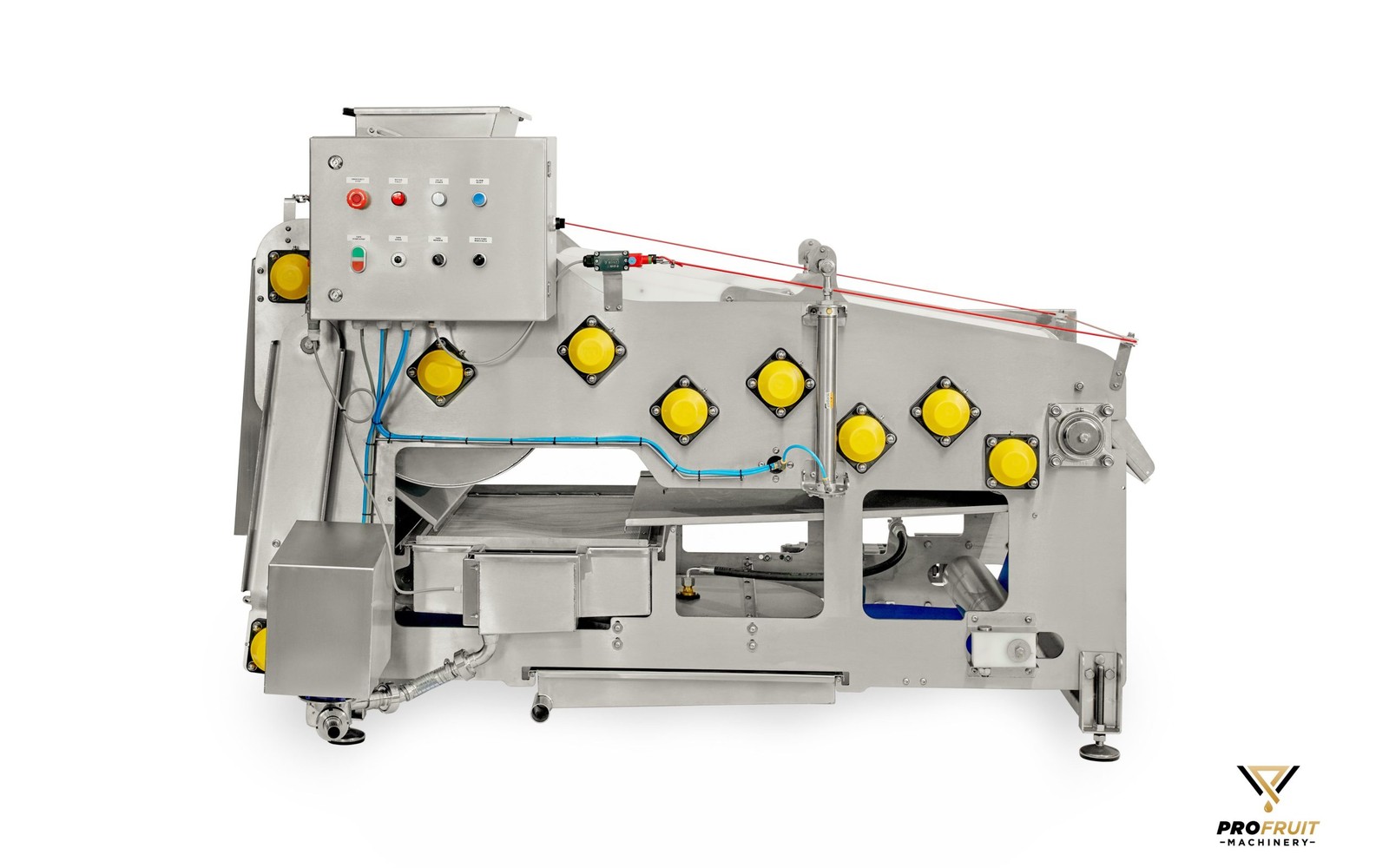
- Cold-press juicers, masticating units, and centrifugal extractors
- HPP machines and aseptic filling systems
- Pasteurizers and homogenizers, including HTST systems
- Filling, capping, and labeling equipment
- Clean-in-place (CIP) systems and industrial washing lines
- Carbonation systems and mixing tanks
- Refrigeration and cold-chain equipment
Used equipment qualifies for bonus depreciation as long as the property has not previously been used by the taxpayer and was not acquired in a related-party transaction. This was a key expansion under TCJA: prior to 2018, bonus depreciation applied only to new property. The used-equipment inclusion made the benefit significantly more accessible for operators buying from closing facilities or upgrading from older gear.
Combining Bonus Depreciation With Section 179
Bonus depreciation and Section 179 can be layered in the same year on the same purchase. The typical sequence is to apply Section 179 first up to the taxable income limit, then apply bonus depreciation to any remaining basis. The combination can result in a nearly full first-year write-off on large equipment purchases even when the business has moderate taxable income.
A juice brand with $200,000 of taxable income buying a $400,000 production system might apply $200,000 of Section 179, bringing taxable income to zero, then apply 40 percent bonus depreciation to the remaining $200,000 basis, generating a $80,000 net operating loss that carries forward. That is $280,000 of the $400,000 purchase price creating immediate or near-immediate tax benefit.
Beverage manufacturers and beverage co-packers running high equipment-expenditure years often work with tax advisers specifically to model this combination before placing orders, because the timing and sequencing can shift the net effective cost of equipment by tens of thousands of dollars.
Financing Structures That Preserve the Deduction
Ownership is required to claim bonus depreciation. An equipment loan transfers ownership at closing, so the full deduction is available immediately. A dollar-buyout lease also transfers ownership at the end for a nominal amount and may qualify depending on how it is structured. A fair market value lease, where the lessee does not acquire ownership rights, generally does not generate a bonus depreciation deduction for the lessee.
If your primary goal is the bonus depreciation benefit, structure the deal as a loan or a dollar-buyout lease from the outset. Changing structures after the fact to recover a missed deduction is complicated and may not be possible. We flag this distinction upfront in every conversation.
Time the Deal Before the Rate Steps Down
If bonus depreciation is part of your equipment purchasing strategy, the year matters. Tell us what you are buying and when you need it in service, and we will structure the financing to close in time to capture the current year's percentage.
Related Financing Paths
Common Questions on Bonus Depreciation Financing
Straight answers before you send the equipment file.
Can bonus depreciation create a net operating loss?
Yes, and this is one of the key differences from Section 179. Bonus depreciation can reduce taxable income below zero, generating a net operating loss that can be carried forward to offset future taxable income. Section 179 is capped at taxable income; bonus depreciation is not.
Does the bonus depreciation percentage apply to used equipment I buy?
Yes, as long as you have not previously used the property and did not acquire it from a related party. Used equipment placed in service in 2025 qualifies for 40 percent bonus depreciation on its purchase price, the same percentage as new equipment placed in service that year.
What if I am not sure whether I will have taxable income this year?
If you are uncertain about your taxable income, bonus depreciation is actually more forgiving than Section 179 because the net operating loss carryforward preserves the benefit into a profitable future year. Work with your CPA to model the carry-forward scenario if your income for the current year is uncertain.
Is there a dollar cap on how much bonus depreciation I can take?
There is no dollar cap on bonus depreciation the way there is a deduction limit on Section 179. A business that buys $5 million of qualifying equipment in a single year can take the applicable percentage on the full amount, subject only to the not-previously-used and not-related-party rules.
Does bonus depreciation affect my state tax return?
It depends on the state. Some states conform to federal bonus depreciation rules; others do not or have their own depreciation schedules. A significant bonus depreciation deduction on your federal return may not produce the same state tax benefit. Your CPA will know your state's treatment.
Ready to Finance Bonus Depreciation Financing?
Send the equipment quote, seller, transaction size, and target timing. The financing desk will review the package and return a clear next step.