Complete Juice-Bar Buildout
Finance your full juice-bar buildout from cold-press to refrigeration to point-of-sale. challenged credit reviewed, with juice-line files kept short near $400k, funded in about.
Opening a juice bar means buying a lot of equipment at once. The cold-press or centrifugal juicer is the headline purchase, but it is surrounded by walk-in refrigeration, prep tables, washing lines, blenders, point-of-sale hardware, and refrigerated display cases. Add leasehold improvements and a first produce order and the total outlay for a professional juice-bar build is routinely $80,000 to $250,000 before a single bottle sells.
We finance complete juice-bar buildouts as a single transaction. The juicer, the refrigeration, the prep equipment, and the soft costs that go with them can all land in one loan. That is simpler than stacking a separate lease for each piece, and it means one payment covering the whole setup rather than four or five running concurrently at different maturity dates.
Our minimum is $50,000. Application-only approval is available up to roughly $400,000, without requiring full tax returns or audited financials. B and C credit is welcome. Funding in about one to two weeks from a complete application is the norm. Whether this is your first location or your third, the process works the same way.
What a Juice-Bar Buildout Actually Includes
The equipment list for a full juice-bar build divides into a few distinct categories, and the mix varies by concept. A cold-press retail bar serving fresh juice by the bottle runs different equipment than a smoothie-forward operation or a combination bar that also sells wellness shots and açaí bowls.
Core juicing equipment is the first bucket. A commercial cold-press juicer anchors most premium concepts, with models ranging from countertop units for lower-volume bars to floor-standing systems that handle serious daily batch production. Centrifugal systems run faster and cost less upfront, trading some yield and oxidation resistance for throughput. For bars doing significant daily volume, a combination of both press types is common, with cold-press for featured SKUs and centrifugal for high-demand items.
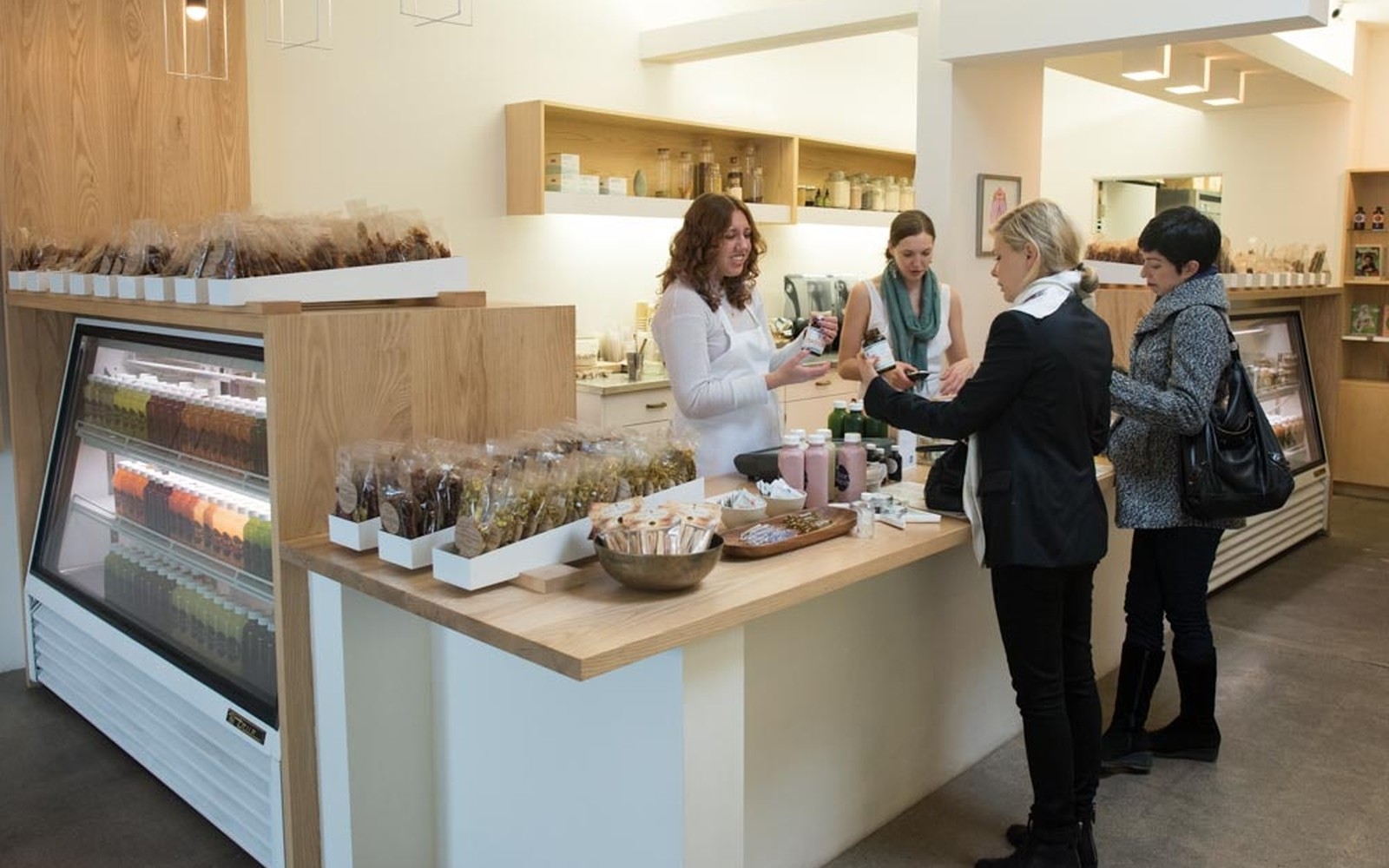
Refrigeration is the second major cost center. Walk-in coolers for produce and finished juice, reach-in display cases at the counter, and under-counter refrigerated prep drawers can together run $20,000 to $60,000 depending on the footprint. Most juice bars also need a blast chiller to rapidly cool pressed juice to safe temperatures before it goes into the display case, especially for same-day batch operations.
Prep and washing equipment rounds out the back-of-house. A fruit and vegetable washing line or a commercial sink setup with brushing capacity handles the daily produce volume. Cutting boards, commercial knives, and prep tables are often expensed separately, but larger prep tables and induction units commonly roll into the equipment loan.
Finishing and front-of-house equipment is the final category: smoothie blending stations, point-of-sale systems, refrigerated grab-and-go cases, cup sealing machines, and the furniture and fixtures that make the space look like a real brand.
Who Is Financing a Full Buildout
First-time juice-bar operators are the most common caller. They have a signed lease, a concept, and a produce supplier lined up, but the equipment list runs longer than the cash on hand. A single buildout loan lets them acquire everything needed for opening day without depleting reserves that are better spent on marketing, staffing, and inventory in the first months.
Juice bars adding a second location also use buildout financing regularly. The first store proved the model; the second store is a capital deployment decision. Owners in that position often know exactly what they need and just want the financing to move as fast as their lease timeline does.
Franchise operators and smoothie shops expanding their footprint are another group. Many franchise systems have equipment packages with established pricing, which makes the buildout loan straightforward since there is a defined equipment list from the franchisor with vendor invoices already in hand.
Gym and wellness center operators adding a juice or smoothie bar to an existing facility also call us. They have an established business, a customer base, and a space that is already built. The add-on bar is relatively small in square footage but requires real commercial equipment to run profitably at the volume a busy gym generates.
How to Structure and Time the Transaction
Juice-bar buildout loans work best when you have a vendor list or a contractor estimate in hand. The cleaner your equipment list, the faster we can approve and fund. A quote from your juice equipment supplier, a refrigeration contractor estimate, and a list of front-of-house items is enough to get started. We do not need final invoices to open a file.
For buildouts that include both equipment and some leasehold improvement costs, we can often wrap a portion of the soft costs into the same facility. Equipment must represent the primary collateral, but installation, electrical work, and plumbing for refrigeration and the production area can sometimes be included. Tell us everything in the budget and we will tell you what fits.
Timing matters on a lease-driven buildout. If your landlord expects you to open in 90 days, you cannot wait six weeks to start the equipment approval process. Submitting an application early, even before you have final invoices, allows credit to be cleared so that when vendor quotes come in, we can fund quickly. Most deals close within one to two weeks of a complete application package.
For operators who want to preserve cash, a no-money-down equipment financing structure keeps your opening cash intact for the first month of produce purchases, payroll, and marketing, with the equipment loan covering the full acquisition cost. Not every file qualifies, but many do, especially when the business entity has an operating track record or the personal credit supports it.
Credit and Documentation for Buildout Loans
Buildout loans for new locations are often the most documentation-intensive deals we do, because the location has no revenue history. In those cases, the credit decision leans on the personal guarantor, the operating history of the existing entity if there is one, and three months of bank statements showing cash flow capacity.
Startups and first-time operators with good personal credit and adequate cash reserves have successfully financed full buildouts through our program. B and C credit borrowers face more scrutiny on the cash documentation, but approval is not out of reach. The key is showing consistent cash flow from whatever source, operating business income, W-2 income, or a combination.
Bad-credit equipment financing is an option worth exploring if your credit score has taken hits from earlier business challenges. We look at the full picture, and a low score does not close the file automatically. Equipment value, cash flow, and the strength of the personal guarantee all go into the decision alongside the credit report.
For multi-location operators building a new site, the existing location's financials and cash flow often support the new buildout. Bring the existing business statements and the new location's lease, and we can usually structure something that works.
Ready to Build Your Juice Bar?
Share your equipment list or contractor estimate, tell us about your business, and we will put together financing options. Applications take minutes, credit decisions come back fast, and there is no fee or obligation to apply.
Related Financing Paths
Common Questions on Complete Juice-Bar Buildout
Straight answers before you send the equipment file.
Can I include leasehold improvements in the buildout loan?
Sometimes, yes. Equipment must be the primary collateral, but installation costs, electrical work, and plumbing tied directly to the equipment can often be included up to a reasonable portion of the total. Full tenant improvement costs for things like flooring, walls, and signage are harder to include and are better suited to a separate working capital loan.
My juice bar has not opened yet. Can I still apply?
Yes. Pre-opening buildout financing is what this program is designed for. We underwrite on the personal guarantor, any existing business history, and your cash position. A signed lease agreement is helpful context. You do not need to be open or generating revenue to apply.
Can I refinance equipment I bought for cash once the bar is open and producing revenue?
Yes. A cash-out refinance or sale-leaseback on equipment you own outright can return capital to your working account. Once your bar has three or more months of bank statements showing operating revenue, the deal is often easier to structure than it was at the pre-opening stage.
I am buying used equipment for my buildout to keep costs down. Does that change the process?
Not significantly. Used equipment qualifies, and we handle private-party purchases as well as dealer buys. Tell us what you are purchasing and where it is coming from. The key is having a clear bill of sale from a known seller with identifiable equipment, whether it is a dealer, another juice bar, or an equipment auction.
How long are terms on buildout loans?
Terms typically run 24 to 72 months. Most buildout loans landing between $80k and $200k fall in the 36 to 60 month window. The right term depends on how you want to balance the monthly payment against total interest paid. Longer terms lower the monthly number; shorter terms reduce what you pay overall. We can model both for you.
Ready to Finance Complete Juice-Bar Buildout?
Send the equipment quote, seller, transaction size, and target timing. The financing desk will review the package and return a clear next step.