

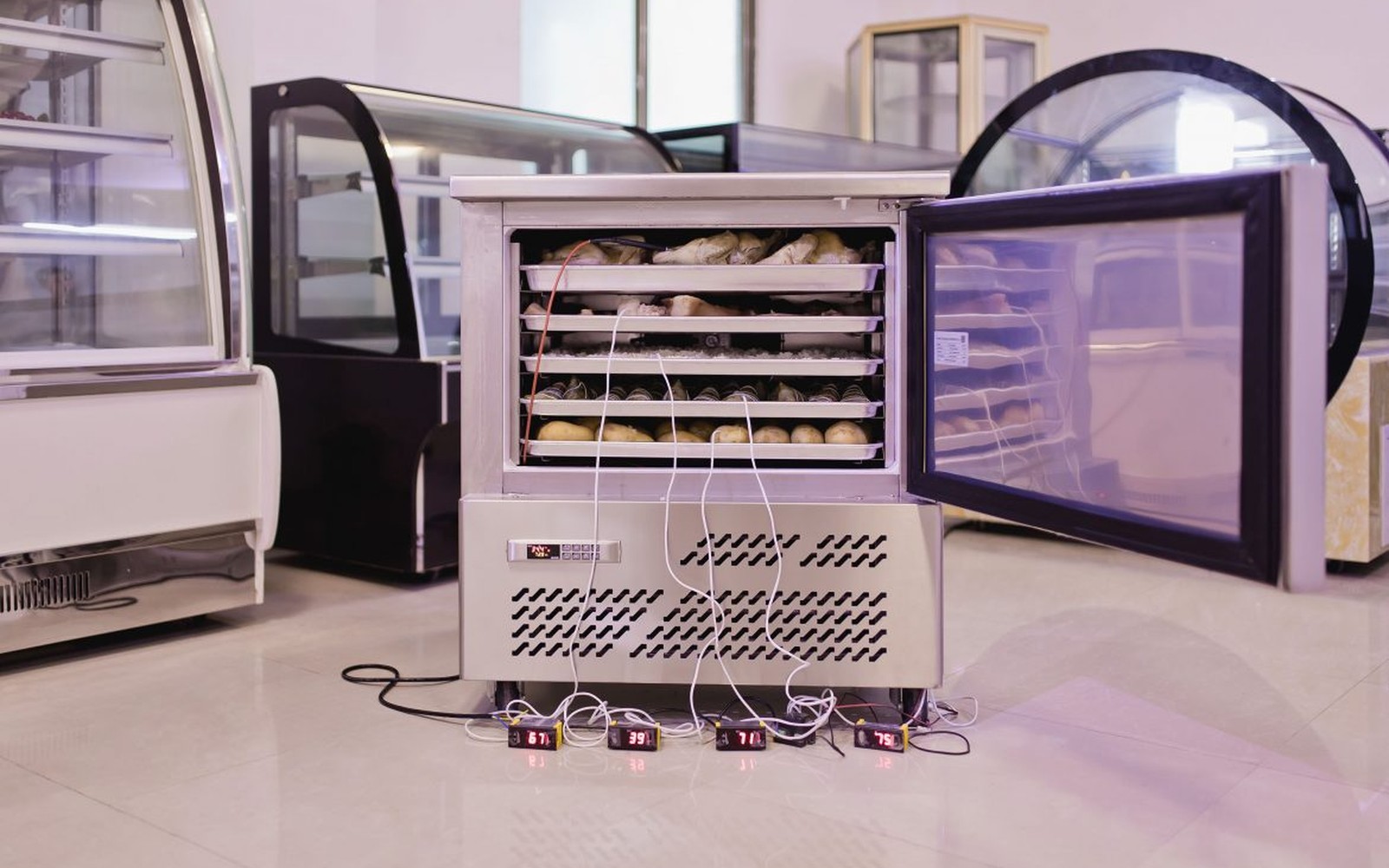
Blast Chiller
Finance a blast chiller for rapid post-production cooling of juice, beverage, or food products. Protect shelf life and food safety. Fast approvals.
Slow cooling after production is where shelf life goes to die. A juice or beverage that exits a pasteurizer at 185 degrees Fahrenheit and coasts down to storage temperature over several hours passes through the danger zone (40 to 140 degrees Fahrenheit) slowly enough to allow bacterial regrowth that erases the benefit of pasteurization. A blast chiller pulls that temperature down in minutes by forcing high-velocity cold air or a glycol bath around the product, dropping it below 40 degrees Fahrenheit before bacterial populations can recover. For any juice brand doing hot-fill, or any food production operation cooling a high-volume batch, a blast chiller is not ancillary equipment. It is food safety infrastructure.
We finance blast chillers for juice manufacturers, meal-prep and cleanse companies, and beverage manufacturers that need rapid post-production cooling for compliance, quality, and shelf-life extension. Commercial blast chillers for production environments range from $15,000 to $25,000 for entry-level units appropriate for smaller batch sizes, to $60,000 to $150,000 for high-capacity tunnel chillers and glycol-bath chilling systems that handle large-format containers and high throughput volumes. Our financing minimum is $50,000.
Blast Chiller Types and Their Applications in Juice Production
Air-blast chillers use high-velocity cold air from refrigerated coils to rapidly cool products. This type is most common for cook-chill food production and is appropriate for juice products in containers that are sealed and can withstand the air velocity. The key performance metric is how quickly the unit pulls the core product temperature from 140 to 37 degrees Fahrenheit; in food safety terms this needs to happen within four to six hours per FDA guidelines, though well-designed blast chillers achieve it in 60 to 90 minutes.
Tunnel blast chillers move products on a conveyor belt through a refrigerated tunnel, providing continuous throughput rather than batch cooling. These are appropriate for higher-volume operations where bottles, cans, or pouches exit a hot-fill line and need to be chilled before labeling, palletizing, and cold storage. A tunnel chiller integrates naturally with a conveyor system and can be staged immediately after the filler on a production line flow.
Glycol immersion chillers (sometimes called ice slurry or liquid chilling systems) immerse products in a chilled glycol bath or an ice-water slurry. This method achieves faster heat transfer than air because liquid conducts heat more efficiently than air at the same temperature. It is used for cooling juice in large-format tanks or bulk containers rather than individual bottles, and also for products like raw juice where air exposure during cooling is not acceptable. These systems are less common for packaged product but relevant for brands producing in bulk before aseptic filling or further processing.
The choice between air blast, tunnel, and liquid chilling depends on your container format, production volume, and where the chiller sits in the production flow. Matching the chiller type to your line layout is part of the capital decision, and we finance all three types.
Who Invests in Blast Chiller Financing
The strongest use case for blast chiller financing is a juice or beverage brand that has invested in hot-fill pasteurization and now needs the complementary rapid cooling step to complete the production flow. A pasteurizer without a blast chiller downstream leaves the quality benefit of pasteurization incomplete; the brand did the sterilization work and then lost ground during a slow cool-down. Juice manufacturers adding a blast chiller are completing a production system, not adding a luxury item.
Meal prep and cleanse companies that produce ready-to-eat programs with juice components also invest heavily in blast chilling. Their HACCP plans require documented rapid cooling for all cooked or pasteurized components, and a blast chiller with data logging provides the temperature records that satisfy both their internal food safety audit and external certification requirements.
Co-packers adding blast chilling capacity to serve clients who require specific cooling protocols round out the common buyer profile. A co-packer who can guarantee a specific time-temperature cooling profile for pasteurized hot-fill products can accept contracts that competitors without blast chilling capability cannot. That differential access to premium contracts is the return on the capital investment.
Blast Chiller Financing Process
Blast chiller projects that meet our $50,000 minimum typically go through our application-only process. Three months of bank statements, basic business information, and the equipment quote. Decisions in two to three business days. For tunnel chillers or complete chilling systems that exceed $400,000, a full credit package applies. Terms on blast chiller financing run 36 to 60 months. We finance as a standalone unit or bundled with a walk-in refrigeration system downstream, which is the most natural pairing: the blast chiller pulls the temperature down fast and the walk-in holds it there.
B and C credit operators are considered. Used blast chillers are acceptable collateral. The secondary market for commercial blast chillers is active through food-service and food-production equipment dealers. Financing a well-maintained used unit is a common way to add rapid cooling capability at a lower capital cost than new, and we support it.
Get Your Blast Chiller Financed
Share the unit type, the throughput you need, your container format, and whether you are buying new or used. We will structure financing and respond within 24 hours. The cooling step is what protects everything your pressing and pasteurization investment produced. Getting the right chiller funded quickly keeps your production flow complete rather than operating with a gap in your cold chain. Submit your request and we will get you numbers fast.
Related Financing Paths
Common Questions on Blast Chiller
Straight answers before you send the equipment file.
Can I finance a blast chiller and walk-in cooler together in one deal?
Yes. A blast chiller paired with a walk-in cooler is the natural cold-chain configuration for juice production. We bundle them into a single financing package regularly. One set of terms, one monthly payment, one closing.
My batch volume is relatively small. Can I finance a smaller blast chiller that comes in under $50,000?
Our minimum is $50,000. If the blast chiller alone comes in below that, combining it with a companion piece of equipment (a walk-in cooler, a conveyor, or another production unit) often brings the total above the minimum. We can work through that with you.
Does a blast chiller qualify for Section 179 deduction?
Commercial blast chillers placed in service in your production facility are generally eligible for Section 179 deduction in the tax year of purchase, provided they are financed through a loan structure (ownership from day one) rather than a lease. Confirm the specifics with your tax advisor.
How does a lender evaluate a blast chiller as collateral?
Blast chillers from recognized commercial manufacturers (Irinox, Henny Penny, Electrolux, Foster, and others in the food-service sector) have a clear secondary market. Lenders treat them as standard food-production equipment. The model, capacity, and condition determine the collateral value.
I produce a raw, unpasteurized cold-press juice and cool the tanks before bottling. Does a glycol tank chilling system qualify for financing?
Yes. A glycol chilling system used to rapidly cool bulk liquid before filling is a legitimate production equipment purchase and qualifies for financing at the same terms as other beverage production equipment, as long as the project meets our $50,000 minimum.
Ready to Finance Blast Chiller?
Send the equipment quote, seller, transaction size, and target timing. The financing desk will review the package and return a clear next step.