Canning Line
Finance a canning line for your juice or beverage brand. New and used equipment, B/C credit considered, closing timed to the beverage-equipment package. Get a quote today.
Cans move product. That is the arithmetic every beverage brand figures out eventually. Glass is fragile, pouches have their niche, but a can stacks tight, ships efficiently, and sits on retail shelves at exactly the eye level your marketing budget is trying to buy. The moment you commit to cans, you need a line that can actually keep pace with your growth, and that line costs real money. We finance canning lines for juice producers, functional beverage startups, and beverage co-packers who are ready to move from manual or contract filling to in-house production. Whether you are stepping up from a semi-automatic seamer or speccing a fully integrated rinse-fill-seam-sleeve system, we can structure the deal.
Canning line pricing ranges widely depending on throughput speed, automation level, and whether the depalletizer and date coder are included. Entry-level semi-automatic lines capable of 15 to 30 cans per minute often start around $80,000 to $150,000 for a basic configuration. High-speed rotary lines capable of 200 or more cans per minute from manufacturers like Krones or KHS run well into the seven figures. Our financing covers that full range, and we work with both new equipment dealers and the private-party or auction purchases where a solid used line represents real value.
What a Canning Line Actually Includes
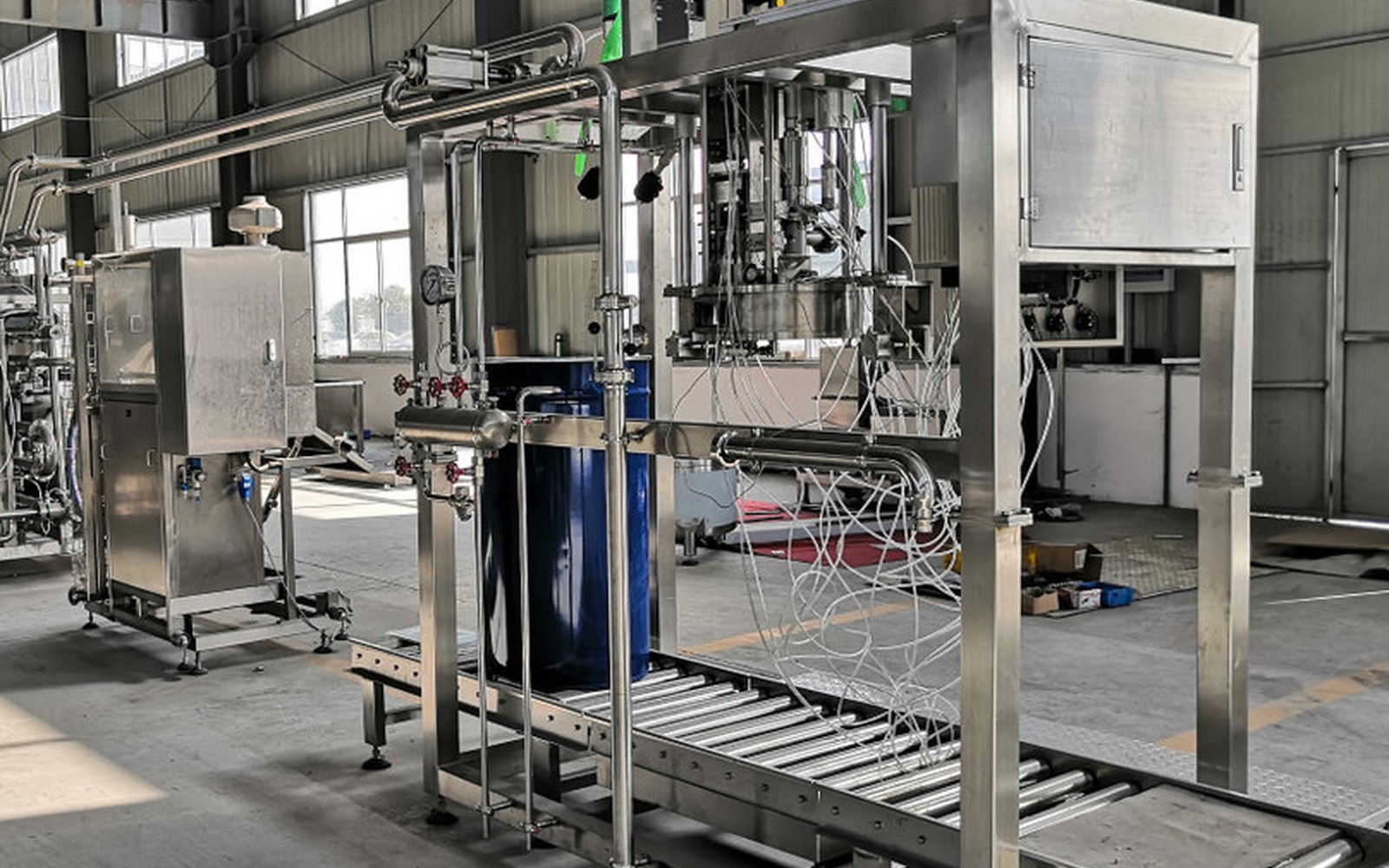
A canning line is rarely a single machine. It is a sequence of stations that have to hand off to each other at the same speed or the whole thing jams. A typical configuration for a juice or beverage brand includes a can rinser to remove manufacturing dust, a filler (volumetric or flow-based), a seamer that double-seams the lid under nitrogen flush if you are doing a cold-fill carbonated product, a date coder or laser marker, and a conveyor that ties it together. Many setups also include a conveyor system upstream that feeds empty cans from a depalletizer.
For juice specifically, fill temperature matters. Cold-fill operations need refrigeration upstream and often a Pasteurizer inline or immediately before the filler if you are doing hot-fill. HPP (high-pressure processing) juice brands sometimes can after HPP processing, which changes the flow entirely. Understanding your process determines which stations are included in the line and whether you are financing the whole integrated system or individual pieces. We finance complete line packages or individual stations, depending on what stage you are at.
Line speeds to know: 15-30 cpm is typical for entry-level semi-auto equipment; 60-120 cpm is mid-tier and covers most craft and regional brands; 200+ cpm is high-speed rotary territory. The gap in capital cost between these tiers is substantial, and matching the line to your realistic 12-month volume projection matters more than buying capacity you will not use for two years.
New Canning Lines vs. Used Lines
Used canning lines appear regularly through equipment dealers, auctions, and direct private sales when brands scale down or transition product format. A used line at 50 to 60 percent of its original cost can represent excellent value if the seamer has been serviced and the filler heads are not worn. We finance used equipment alongside new, with no restriction on age as long as the collateral is appraised or invoiced at a defensible value.
New lines from established manufacturers carry warranties, current parts availability, and the ability to integrate with modern controls and SCADA systems. If you are running a co-packing operation or a brand with multiple SKUs that require quick changeovers, new equipment with programmable recipe settings often pays back the premium over time. The financing structure can look the same either way: an equipment loan with the line as collateral, or an equipment lease if you prefer lower monthly payments and want to evaluate upgrading in three to five years.
Financing Terms for Canning Lines
Our minimum is $50,000, and most complete canning line packages we finance fall comfortably above that threshold. For deals up to roughly $400,000 we can often structure an application-only approval using three months of bank statements rather than full financials, which keeps the paperwork load reasonable. Above that level we work through a standard credit package. B and C credit operators are considered; we do not require perfect credit history to get a deal done. Funding typically completes in about one to two weeks after approval.
Term lengths commonly run 36 to 72 months on canning line financings, with monthly payments structured around the equipment value and your credit profile. You can also explore a Sale-Leaseback if you already own a line and want to unlock the equity for working capital or facility expansion. The line stays in your plant and keeps running; you get cash out and a payment schedule going forward. Juice brands and beverage co-packers use this structure more often than people expect, especially when they are mid-growth and need capital for raw materials or a second SKU launch.
Related Financing Paths
Common Questions on Canning Line
Straight answers before you send the equipment file.
Can I finance a canning line I found at auction or through a private seller?
Yes. We finance private-party purchases and auction buys. We need an invoice or appraisal to establish the collateral value, but used lines from a dealer, auction house, or direct seller are all acceptable. Check our page on private-party equipment purchases for more detail.
Do I have to finance the entire line, or can I finance a single station like just the seamer?
We can finance individual stations as long as the total reaches our $50,000 minimum. A standalone seamer, filler, or can rinser qualifies if priced appropriately. Many brands piece-build a line over time, financing each major station separately.
My business is under two years old. Can I still get approved for canning line financing?
Startups and newer businesses are considered through our startup financing program. Newer companies typically need a stronger down payment or a personal guarantee, but the deal can still get done. We look at the whole picture, not just the time-in-business number.
What if I already own a canning line and want to pull cash out of it?
A sale-leaseback or cash-out refinance lets you monetize equipment you already own. The line stays in your facility; we purchase it and lease it back to you, generating a lump-sum capital injection. Terms run 24 to 60 months in most cases.
Is a nitrogen flush or CO2 carbonation system on the line financeable as part of the package?
Yes. Auxiliary systems that attach to and support the canning line, including gas flush units, inline date coders, and conveyors, are typically bundled into the same collateral package rather than financed separately.
Ready to Finance Canning Line?
Send the equipment quote, seller, transaction size, and target timing. The financing desk will review the package and return a clear next step.