Capping Machine
Finance a capping machine for your juice or beverage production line. Flexible terms, fast approvals, B/C credit considered. Deals from $50k.
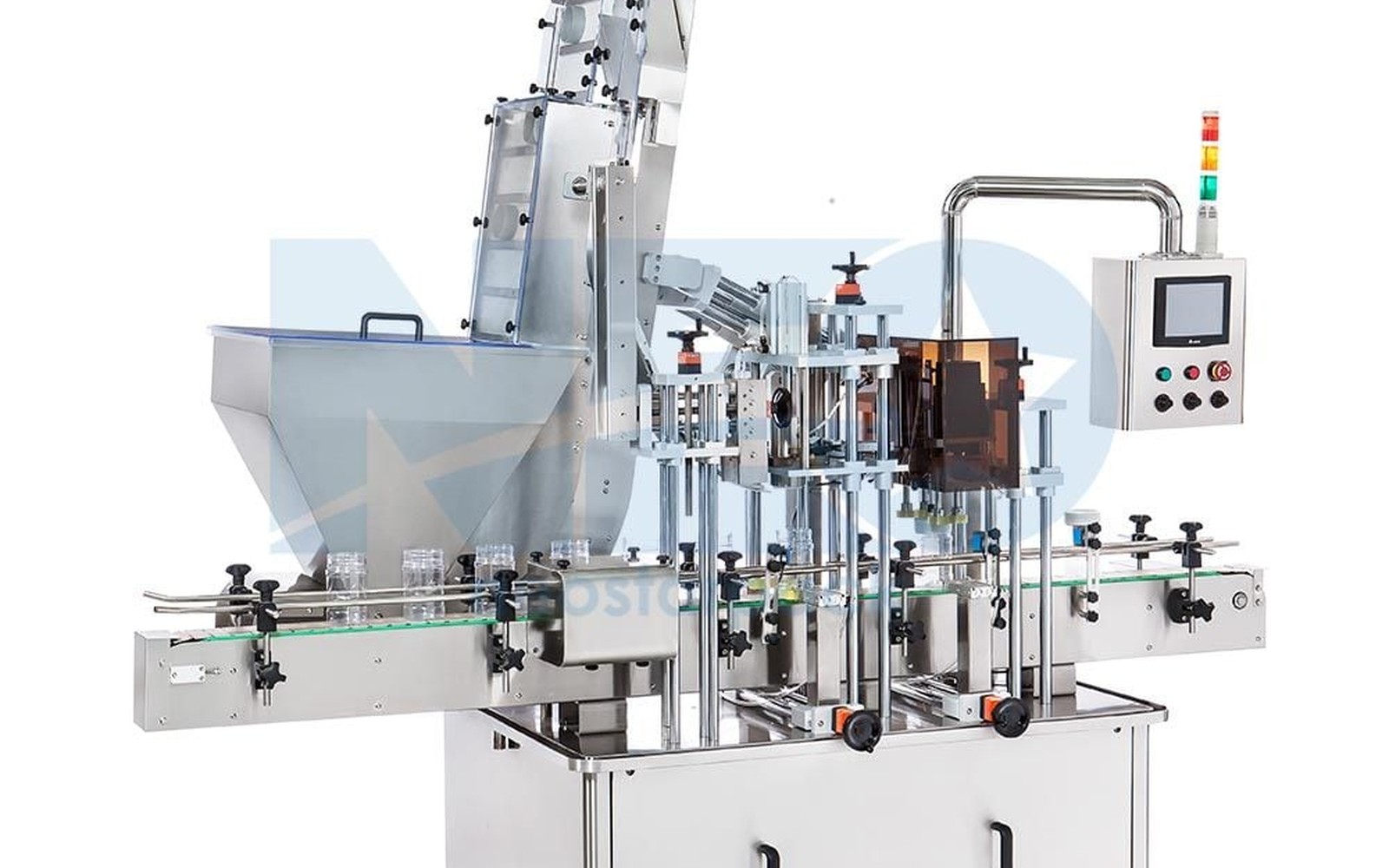
The cap is the last point of contact between your production line and the bottle before it reaches the shelf, and a bad seal is a recall. Capping machines that apply closures inconsistently, over-torque and crack the threads, or leave bottles improperly sealed create product losses and liability exposure that dwarf any equipment savings from buying cheap. Commercial capping equipment for juice and beverage lines ranges from standalone semi-automatic torque cappers for small-batch operations to fully automated inline and rotary cappers that apply closures at thousands of bottles per hour in synchronization with a high-speed filling system. Getting the capping step right is not a secondary decision.
Capping machines for commercial juice production start around $10,000 for benchtop semi-automatic units and scale to $200,000 or more for high-speed rotary cappers integrated into a full bottling line. That range means most commercial capper purchases fall below our $50,000 minimum when purchased alone, but become very natural bundled deals when paired with a filler, labeler, or complete line buildout. We structure those bundled deals regularly and can make capping equipment the anchor or the add-on depending on what the buyer is prioritizing.
Capping Technologies for Juice and Beverage Applications
Capping machines differ by closure type, torque application method, and throughput. Screw cappers (torque cappers) are the most common in juice production, applying threaded caps by rotating them to a set torque value on each bottle. ROPP (Roll-On Pilfer-Proof) cappers are used for aluminum closures on glass bottles and wine-style packaging. Snap cappers apply press-on closures like those used on certain sports-drink and single-serve juice formats. Corking and crimp-sealing machines serve the specialty and kombucha segments.
Torque capping machines require precise torque specification to avoid under-application (loose caps that leak or allow contamination) and over-application (stripped threads, cracked closures, or caps that consumers cannot open). Most commercial torque cappers allow adjustable torque settings per closure type and include electronic torque monitoring on higher-end models. The investment in a well-specified torque capper pays out in lower product rejection rates and fewer returned or damaged units from retail.
For buyers running a inline filler, an inline capper that matches the filler's output speed is the natural companion. For buyers on a rotary filler, a rotary capper with comparable bottle-per-minute capacity maintains throughput continuity. A rotary filler feeding a slower inline capper creates a bottleneck that limits effective line output to the capper's speed.
Accutek, Pneumatic Scale Angelus, Fowler Roscor, and E-PAK are common capper brands in juice and beverage production. Accutek is particularly well-known for mid-volume commercial cappers, while Pneumatic Scale Angelus dominates in high-speed industrial applications.
Financing Your Capping Equipment
Capping machine deals under $400,000, which covers the majority of commercial and mid-industrial capper purchases, qualify for application-only financing. The application process is fast and the documentation requirements are minimal. Standalone capper deals below $50,000 do not meet our minimum, but when the capper is part of a bundled line purchase, the combined deal easily qualifies. Most buyers we work with are financing the filler, capper, and labeler together, and bundling those into a single application is the standard path.
Terms on capper financing run 36 to 60 months. A $60,000 capper financed over 48 months carries a monthly payment that a production line running at even moderate capacity generates within the first week of a good month. For buyers who are upgrading from a semi-automatic capper to a fully automatic system, the labor savings from automation often exceed the monthly payment, making the upgrade cash-flow positive from the first month of operation.
Capping as Part of the Bottling Line Deal
Most capper financing happens within the context of a broader bottling line deal rather than as a standalone purchase. When the filler, capper, labeler, and conveyor are all acquired at the same time, bundling into a single loan or lease is cleaner and usually better on terms. We have structured multi-machine deals for complete bottling-line buildouts that include the capper as one component alongside a filler, labeler, case packer, and refrigeration.
For juice manufacturers upgrading to a higher-speed capping system without replacing the rest of the line, a standalone capper loan covering the new unit with the old unit sold or traded is also a workable structure. Document the trade-in value of the existing capper and apply it to the down payment on the new one to reduce the financed amount and improve the monthly payment.
Related Financing Paths
Common Questions on Capping Machine
Straight answers before you send the equipment file.
My capper is $35,000 on its own. Can you finance it?
A $35,000 standalone capper falls below our $50,000 minimum. If you are also purchasing a filler, labeler, or other line equipment at the same time, bundling everything into a single deal will clear the minimum and often results in better terms than multiple small transactions would anyway.
We run both screw caps and ROPP closures depending on the SKU. Can one machine handle both?
Combination cappers that handle both closure types are available from several manufacturers. These machines typically require a changeover between closure formats. If changeover time matters to your production schedule, the machine spec sheets should document format conversion time, which varies significantly between models.
Can I refinance a capper I already own to get capital for other equipment?
If the capper has meaningful equity, a sale-leaseback converts that equity to cash while the machine stays on your floor and production continues. For cappers with lower individual values, the equity may not be large enough to justify the transaction cost. We will look at the machine value and let you know if a sale-leaseback makes sense on your specific unit.
Our production just expanded and our current capper is the bottleneck. Can we finance a second one quickly?
If your business already has a financing relationship with us or with a lender in our network, adding a second machine can move faster than the initial deal because the credit file already exists. Application-only deals under $400,000 can still close in one to two weeks from application to funding even as a first deal, so timeline is often not the constraint it feels like.
Ready to Finance Capping Machine?
Send the equipment quote, seller, transaction size, and target timing. The financing desk will review the package and return a clear next step.