Inline Filling Machine
Finance an inline filling machine for juice or beverage production. Flexible terms, fast approvals, B/C credit considered. Deals starting at $50k.
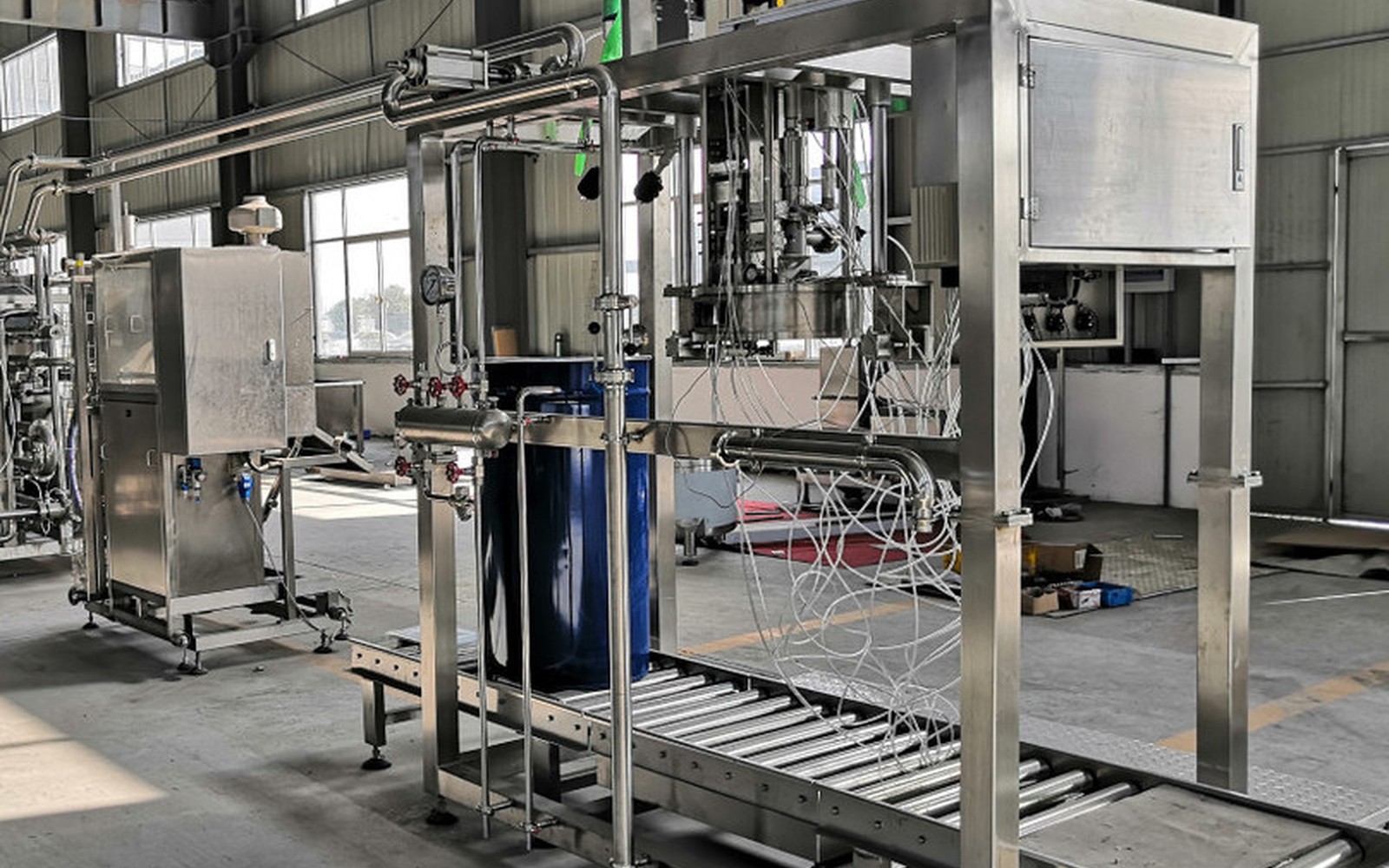
Inline filling machines earn their place at the production tier between hand-filling and high-speed rotary automation. They move bottles in a straight line through a sequence of filling nozzles, filling each in succession before the line advances. That linear architecture is simpler to operate, easier to clean, and requires less floor space than a rotary carousel, which makes inline fillers the right tool for mid-volume producers who have outgrown manual or semi-automatic filling but do not yet have the throughput to justify a full rotary system.
For a juice brand doing 500 to 5,000 cases per week, an inline filler is often the critical piece that allows a move from co-packer dependency to in-house production control. That control matters for both quality and scheduling. When your filler is on your floor, you run your own shifts on your own timeline, and a retailer's last-minute order does not require renegotiating a co-packer's production slot. Inline fillers in the commercial range start around $30,000 for basic models and run to $150,000 or more for fully automated multi-nozzle units, which puts the majority of mid-volume inline filler purchases within our financing program.
Inline Filler Configurations and What Drives the Price
Inline fillers are categorized primarily by fill method (gravity, volumetric piston, flowmeter), number of filling heads, level of automation, and container compatibility. A two-nozzle gravity inline filler is simple and low-cost but slow. An eight-nozzle electronic flowmeter inline filler on an indexing conveyor is significantly faster and more accurate, and correspondingly more expensive.
Fill accuracy is where the money goes. Electronic flowmeter controls and servo-driven volumetric pistons reduce fill variance to less than 0.5 percent by volume, which directly reduces product giveaway. A brand filling 10,000 units per day at even a 2-percent fill-weight variance is giving away meaningful product and real margin per year. The payback on a more accurate filler shows up in yield data, not just throughput numbers.
Changeover time between bottle formats is another spec that separates cheap inline fillers from professional-grade ones. A filler that takes four hours to convert from 16-ounce glass to 32-ounce HDPE costs production hours with every SKU switch. Quick-change toolless conversion features that allow format changes in under 30 minutes are common on well-designed mid-range inline fillers and are worth the premium when your production schedule includes multiple formats.
For brands that also use a capping machine downstream, verifying that the inline filler's output rate matches the capper's input capacity is essential. A mismatched pair creates a bottleneck that limits effective throughput to the slower machine's speed regardless of what either machine is rated to do.
Financing an Inline Filling Machine
Inline filling machines that fall under $400,000 in total deal value qualify for our application-only financing process. That means a one-page application, a credit review, and an approval decision in 24 to 72 business hours without a tax return. Terms on inline fillers typically run 36 to 60 months. A $75,000 inline filler financed over 48 months carries a monthly payment that most brands running it at capacity can service comfortably from the co-packer savings alone.
When the inline filler is being purchased as part of a broader filling line buildout, including an inline filler, a capper, a labeling machine, and associated conveyors, bundling into a single deal is the cleaner path. A single loan simplifies accounting, may yield better rate terms at higher deal size, and reduces the documentation overhead of managing multiple individual loan files.
Beverage manufacturers and cold-press juice brands that finance inline fillers through us most often use an equipment loan structure rather than a lease, because the plan is to run the machine for five to eight years and own it outright. Leasing makes more sense when the brand expects to step up to a rotary system within four years or when balance-sheet treatment is the priority.
Which Operators Typically Finance Inline Fillers
The buyer profile for inline filler financing is a brand or co-packer at the volume inflection point. Production has scaled to where co-packing fees are a meaningful and growing line item, the brand has reliable purchase orders, and the operators are ready to take quality control in-house. An inline filler is often the first piece of owned production equipment outside of the press, and the emotional and financial significance of that first in-house fill run is real in this industry.
Juice bars expanding to wholesale, functional beverage startups landing their first grocery distribution agreement, and co-packers adding a second production configuration all show up in this buyer profile. None of them are the same business, but all of them share the same equipment need at a similar volume threshold.
Related Financing Paths
Common Questions on Inline Filling Machine
Straight answers before you send the equipment file.
Can I finance an inline filler even if I am not yet at full production volume?
Yes. The application reviews your business as it currently operates, not just the volume the new machine will eventually support. If you have revenue, a credit history, and a credible production plan, there is a path to financing. Startups or very early-stage brands may need to apply through startup financing programs with different documentation requirements.
Our inline filler will also be used to fill products for toll clients in addition to our own SKUs. Does that affect the deal?
Operating the filler for your own brand and for co-packing clients is a productive model. If you have toll-fill contracts or letters of intent from clients, include them in the application. They demonstrate that the machine will have multiple revenue sources, which can only help the credit picture.
What is the difference between financing an inline filler versus a rotary system?
The financing mechanics are identical. The main practical difference is price. Inline fillers are generally less expensive than rotary systems of equivalent throughput, so the deal size is lower. Rotary systems above a certain throughput threshold are usually higher-ticket and often involve more documentation. The credit review process for both is the same.
Can I add a second inline filler to a master agreement later?
A master equipment financing agreement can accommodate additional equipment over time. When you are ready to add a second filler, we open a new tranche under the same master agreement rather than starting from scratch. The original deal structure makes the add-on simpler for both the lender and the borrower.
I have bad credit from a few years ago. Can I still qualify for inline filler financing?
B and C credit profiles are eligible in our program. The rate and term terms will reflect the credit picture, but approval is available to businesses with blemished credit histories if the business itself shows revenue and stability. Personal credit is one input among several, not a single determinant.
Ready to Finance Inline Filling Machine?
Send the equipment quote, seller, transaction size, and target timing. The financing desk will review the package and return a clear next step.