Ceado Financing
Finance Ceado commercial juicers and cold-press extractors. Fast approvals, flexible terms, B/C credit considered. Get a quote for your Ceado purchase.
Ceado built its name in espresso grinders before it started making commercial juicers, and that engineering background shows up in how their extraction equipment is built. The Italian company treats its commercial juice and citrus machines with the same precision-component thinking it applies to coffee, which means tight tolerances, low maintenance intervals, and consistent output from batch to batch. For a juice bar operator or small cold-press brand that runs the same fruits through the same machine every day, that consistency is not a trivial thing. A press that delivers predictable yield per batch lets you price product and manage inventory with real numbers instead of guesses. Financing a Ceado machine means committing to that reliability, and structuring the cost across monthly payments makes the commitment manageable without draining the cash your operation needs to keep running.
We finance Ceado commercial juicers for single-location juice bars, multi-site operators, grocery fresh-squeeze programs, and specialty cafes that want front-of-house extraction without the operational complexity of a centrifugal machine that requires constant cleaning. Our minimum is $50,000, and Ceado purchases typically reach that threshold when bundled with refrigeration, a cold-press display case, or a full juice bar buildout. We consider B and C credit files alongside the standard range and fund in roughly one to two weeks from completed application.
Ceado Equipment We Finance
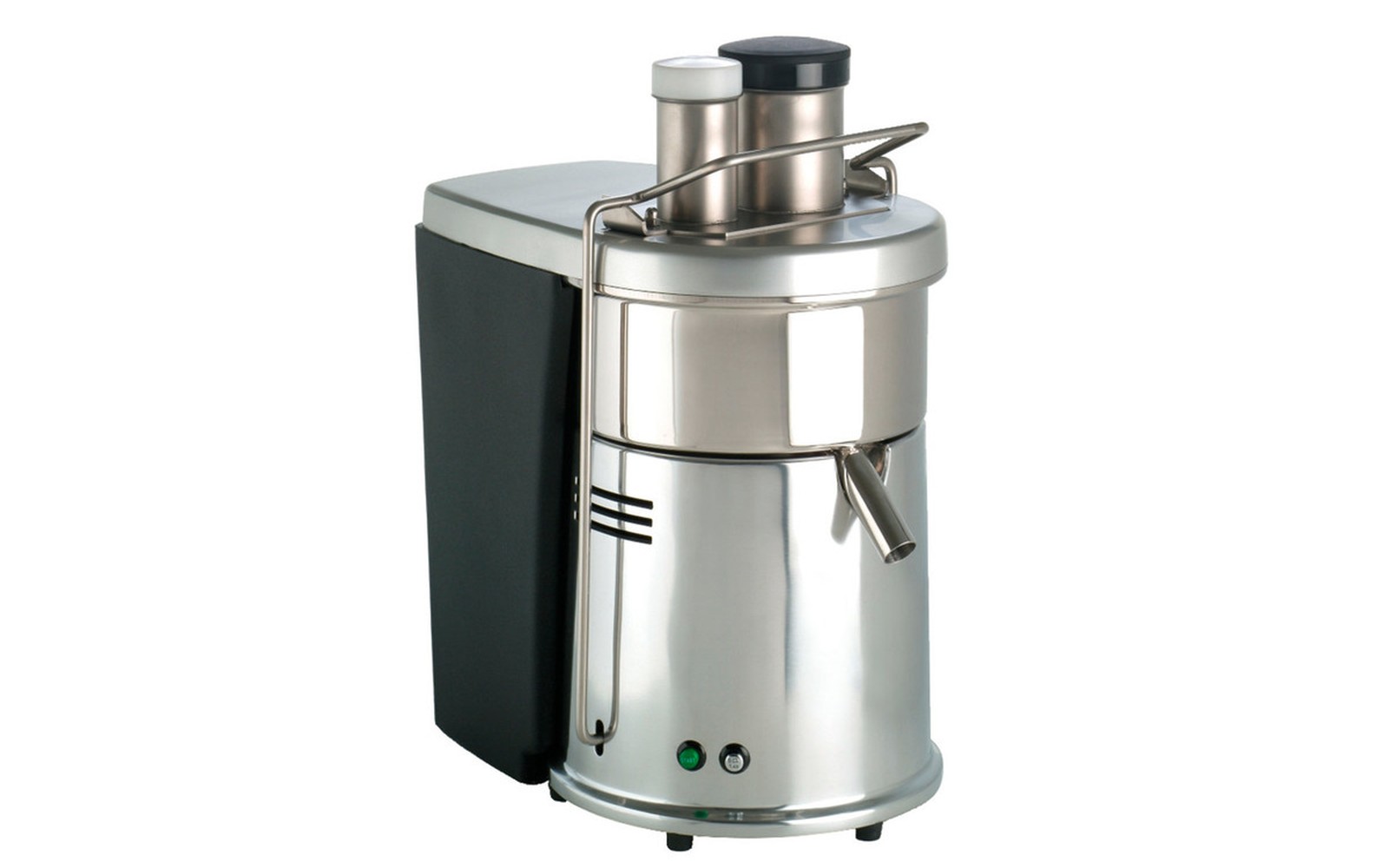
Ceado's commercial juicer lineup includes the Ceado ES900 commercial juicer, a high-speed citrus extractor designed for continuous counter service in high-volume environments, and the Ceado CP150 cold-press juicer, a masticating slow-press machine that processes a wider range of produce for operations that need a cold-press offering alongside citrus service. These two machines address different extraction needs and often coexist in the same operation, with the ES900 handling citrus volume during peak service and the CP150 running cold-press batches on a prep schedule.
The ES900 is built on a body that handles high fruit loads with a motor and reamer design meant for production-level speed. The CP150 operates differently, using a slow masticating auger to extract juice with minimal heat and oxidation. Together they let a juice bar or cafe offer both fresh-squeezed orange juice and cold-pressed green or root vegetable juice from the same production setup. Financing both as a package under a single deal is practical and common when building out a new juice program. The combined cost often reaches the $50,000 threshold comfortably, especially with refrigeration and display included.
The Operations That Benefit Most from Ceado Financing
Juice bars running a daily counter service are the core Ceado customer. The ES900 excels in exactly the setting where counter speed matters: a morning rush at a gym lobby, an airport grab-and-go concept, a hotel lobby bar during breakfast service. For these operations, downtime during peak hours is lost revenue and frustrated customers, so the machine's construction quality and reliability have direct financial consequences. Financing the machine rather than buying it outright preserves the working capital needed for produce purchasing, staffing, and the unexpected costs that show up in the first year of any food-service concept.
We also work with gyms and wellness centers that have added juice service as a revenue line. These operations often run juice alongside smoothies and protein shakes, and a Ceado juicer fits a wellness retail environment where the presentation and counter speed matter as much as the output volume. Restaurants and cafes with a fresh-juice program are another category, particularly upscale breakfast and brunch concepts where fresh-squeezed juice is a table-stakes offering. A reliable, attractive countertop machine that produces consistent output and cleans easily is the baseline requirement, and Ceado meets it.
How the Financing Process Works for Ceado Buyers
For Ceado purchases that fit the application-only range, the process is a single credit application and, in most cases, three months of business bank statements. We do not need full tax returns or audited financials for smaller deals. Approval decisions typically come back in a few business days, and funding follows within one to two weeks. The funds go directly to the vendor or dealer where you are purchasing the equipment, or to a private seller if you are buying a used machine.
We finance new and used Ceado equipment. The Italian build quality on Ceado machines means they retain value and hold up well in the secondary market. A used ES900 in good working order can be an excellent entry point for a new juice bar that wants proven commercial equipment without the full new-unit price. We ask for documentation of the machine's condition and a bill of sale for private-party purchases. For application-only financing, the most important elements are your personal credit score, business revenue history, and time in business. A business with at least a year of operation and clear monthly cash inflows is typically in a strong position for a Ceado approval.
If your Ceado purchase is part of a larger buildout that includes refrigeration, a complete juice bar buildout package, or additional blending and smoothie equipment, we can bundle the full project into a single financing arrangement. That approach gives you one payment, one term, and one closing process, which is simpler than managing multiple separate financing accounts for a buildout that involves several vendors.
Related Brands and Equipment Worth Comparing
Ceado competes in the commercial juicer space with other Italian and Spanish brands. If your operation needs high-volume citrus extraction specifically, Zumex commercial juicers are worth evaluating alongside Ceado, particularly the Speed Pro for operations where throughput speed is the primary requirement. Zumex has a larger global distribution network in the hospitality channel, while Ceado has a strong presence in specialty coffee and cafe environments where the equipment's design aesthetic matters to operators.
For operations that want a cold-press masticating machine rather than a high-speed citrus extractor, the Ceado CP150 competes in a category alongside commercial masticating juicers from several other manufacturers. The right choice depends on your specific produce mix, batch size, and how you want to position the juice program to your customers. We finance across all these categories, so the brand decision does not affect the financing conversation.
Related Financing Paths
Common Questions on Ceado Financing
Straight answers before you send the equipment file.
Can I bundle a Ceado ES900 and a CP150 into one financing deal?
Yes. Bundling multiple pieces of equipment into a single deal is common and practical. It means one application, one approval, one monthly payment, and one term. If the combined purchase price of both machines plus any ancillary equipment reaches our $50,000 minimum, the bundled deal works cleanly. We just need invoices or quotes for both machines.
My cafe is less than a year old. What does that mean for a Ceado approval?
Less than twelve months in business puts you in the startup category, which requires a somewhat different evaluation. We look closely at personal credit, the trajectory of your monthly revenue over the period you have been open, and the overall business plan. Strong personal credit and rising monthly revenue can support an approval even with limited operating history, though terms may differ from what a more established business would receive.
Does the Ceado machine need to be purchased from an authorized dealer for financing to work?
No. We finance Ceado equipment purchased from authorized dealers, independent commercial equipment dealers, and private sellers. The documentation requirements differ slightly depending on the source, with private-party purchases requiring a bill of sale and verification of the machine's condition. The equipment itself needs to be in the US and in working order.
How does a fair-market-value lease compare to a loan for a Ceado purchase?
A loan gives you ownership of the machine at the end of the term, and you can take Section 179 depreciation in the year of purchase. A fair-market-value lease typically offers a lower monthly payment and lets you return or upgrade the machine at the end of the term rather than carrying residual value risk. For a business that expects to upgrade equipment in three to five years, a lease can make financial sense. We can show you the numbers for both on the same machine.
Can I refinance a Ceado machine I already own to free up cash?
If you own a Ceado machine outright or have substantial equity in one, a sale-leaseback or cash-out refinance can convert that equity to working capital while keeping the machine in service. This makes the most sense when the machine is fully paid off and the business has a capital need it cannot easily cover from cash flow alone.
Ready to Finance Ceado Financing?
Send the equipment quote, seller, transaction size, and target timing. The financing desk will review the package and return a clear next step.