

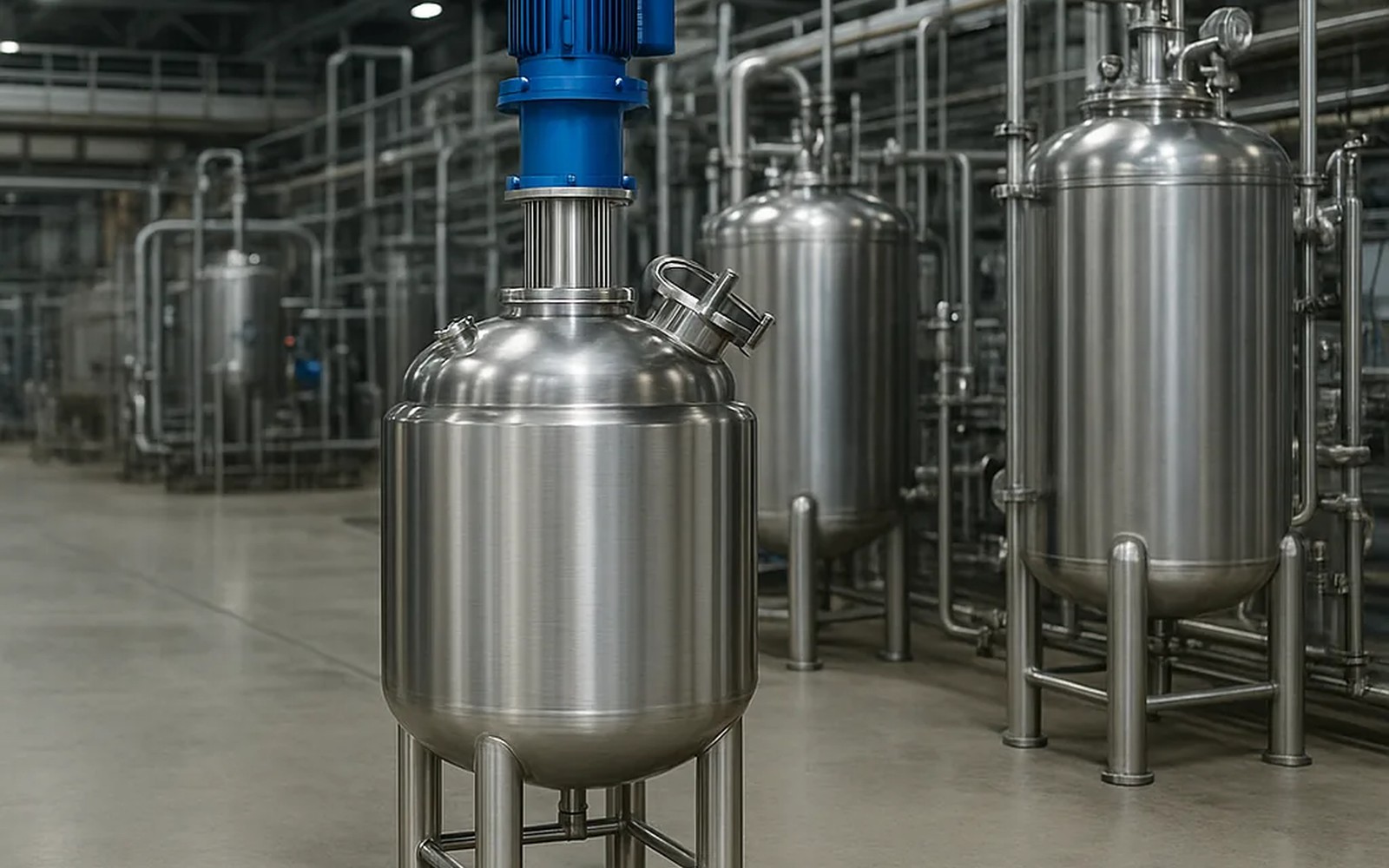
Jacketed Batch Tank
Finance a jacketed batch tank for precise temperature-controlled beverage production. Kombucha, juice, or functional drinks. Closing timed to the beverage-equipment package.
Temperature control is not optional in fermented or heat-sensitive beverage production. A kombucha brand fermenting at 78 degrees Fahrenheit versus 84 degrees produces a meaningfully different product, and a juice brand blending with heat-sensitive botanical extracts needs to stay within a tight window to protect both efficacy and flavor. A jacketed batch tank, with its separate outer cavity circulating heated or chilled fluid around the inner vessel, gives you that precision control across the whole batch, not just at a probe point.
We finance jacketed batch tanks for kombucha producers, juice brands working with temperature-sensitive ingredients, functional beverage startups, and craft beverage operations building fermentation or blending capacity. Jacketed tanks in the 100 to 2,000 gallon range for commercial beverage production typically price from $20,000 to $120,000 depending on capacity, jacket type, and included features like agitators, CIP spray balls, and sample ports. Our financing minimum is $50,000, which usually means a well-equipped production tank or a pair of entry-level units combined into one deal.
Jacketed Tank Configurations and What They Mean for Your Process
A full jacketed tank has the outer jacket running the entire circumference and typically down to the cone or bottom of the vessel. This maximizes the heat transfer surface area and gives you faster, more uniform temperature change across large batch volumes. A half-jacket runs only the lower half or two-thirds of the vessel body, which is often sufficient for smaller batch sizes and can reduce the cost of the tank.
Dimple-plate jackets are an alternative to a solid outer shell. The dimpled plate is welded to the outer surface of the inner vessel, and fluid flows through the channels created by the dimples. Dimple jackets are common on tanks used for light heating and cooling duty and are often less expensive than full-weld jackets. For deep chilling (holding a batch near freezing) or for steam heating, a full shell jacket is typically more appropriate.
The fluid circulated through the jacket depends on your application: hot water or steam for heating, glycol or chilled water for cooling. A jacketed fermentation tank for kombucha typically runs glycol cooling to maintain fermentation temperature; a jacketed blending tank for a beverage that requires ingredients to dissolve at heat might run steam or hot water. Many production facilities have a central glycol chiller system that serves multiple jacketed tanks simultaneously, and that chiller is a piece of equipment we can also finance. Mixing and blending tanks with simpler temperature requirements might not need a jacketed configuration, but any product requiring fermentation, precise pasteurization hold, or ingredient dissolution at a specific temperature is a candidate for a jacketed vessel.
Agitation in a jacketed tank is common. A top-mounted mixer with a slow-speed sweep agitator is typical for fermentation to avoid disrupting yeast or bacterial culture; a faster agitator is used for dissolving dry ingredients or maintaining a suspended blend. Specifying the right agitator geometry for your product is part of the capital decision, and we finance the complete tank including agitator as a single unit.
Financing Terms for Jacketed Batch Tanks
For deals at $50,000 or above, our application-only process is the fastest path: three months of bank statements, basic business information, and the equipment invoice or fabricator quote. Most single jacketed tank purchases fall in this range. For multi-tank installations or complete fermentation rooms that include tanks, temperature control equipment, and supporting infrastructure, the project cost often exceeds $400,000 and requires a standard credit package with tax returns and financial statements.
Terms run 36 to 60 months for most jacketed tank financing. You can structure as an equipment loan (ownership from day one, eligible for Section 179 depreciation treatment) or as an equipment lease if lower monthly payments are the priority. B and C credit businesses are considered; we do not require pristine credit to move forward. Startups should expect to provide a personal guarantee and in some cases a down payment.
We also finance used jacketed tanks. Sanitary stainless tanks from manufacturers like Cherry-Burrell, Feldmeier, or APV hold their value and can be purchased from equipment brokers or closed facilities at meaningful discounts from new pricing. The financing structure is the same for used units as for new.
Related Financing Paths
Common Questions on Jacketed Batch Tank
Straight answers before you send the equipment file.
Can I finance a glycol chiller at the same time as my jacketed tank?
Yes. A central glycol chiller that serves the jacketed tank is a natural companion piece and can be included in the same financing package. The combined collateral value often makes the transaction cleaner than financing each piece separately.
I need four fermentation tanks at once. Do I apply once or four times?
One application for the batch. We treat a multi-tank installation as a single transaction. You supply one equipment list and one credit package, and we structure the deal for the full amount with one set of monthly payments.
My brand is 18 months old and we have not been profitable yet. Can we still qualify?
Yes. We look at revenue trends, bank statement cash flow, and the collateral value of the equipment. A business that is growing revenue even without reaching profitability yet is a conversation worth having. Startups under two years typically need a personal guarantee and sometimes a modest down payment.
Can I finance a jacketed tank that is being custom-fabricated?
Yes. Custom fabrication from a sanitary tank manufacturer is financed the same as an off-the-shelf purchase. We need the fabrication quote or purchase order to document the cost. Progress payments to the fabricator during build can sometimes be accommodated for larger projects.
What is the difference between financing a jacketed tank and financing a standard blending tank?
From a financing perspective, the structure is identical. Both are sanitary stainless beverage production vessels financed as equipment loans or leases. The distinction is in the equipment specification: a jacketed tank includes the outer shell and fluid circulation system for temperature control, while a standard mixing and blending tank may or may not include that feature.
Ready to Finance Jacketed Batch Tank?
Send the equipment quote, seller, transaction size, and target timing. The financing desk will review the package and return a clear next step.