Sidel Financing
Finance Sidel blow-molding, filling, labeling, and complete PET packaging lines for juice and beverage production. Deals from $50k, application-only to ~$400k.
Sidel is a global leader in complete PET packaging lines for liquid food products. Juice brands, functional beverage companies, and large-scale manufacturers use Sidel blow-molding systems to produce their own PET bottles on-site rather than purchasing pre-formed containers, and then fill, cap, label, and palletize on integrated Sidel lines. The integrated approach reduces per-bottle material cost, eliminates the logistics of receiving and storing empty bottles, and gives producers full control over bottle shape and weight for branding differentiation.
Sidel lines are significant capital investments. Their Matrix blow-molders, FillerMatrix fillers, and EvoFILL series are engineered for high-speed continuous production, which means the businesses buying them are typically processing thousands of bottles per hour. For a juice producer making that leap from mid-volume filling to a full PET line, the capital question is central to whether the expansion makes financial sense, and how it is structured affects the cash flow model for the next five or seven years. We finance Sidel equipment and complete Sidel line packages for beverage producers at the stage where this equipment makes sense.
Sidel's Key Equipment Families for Juice Producers
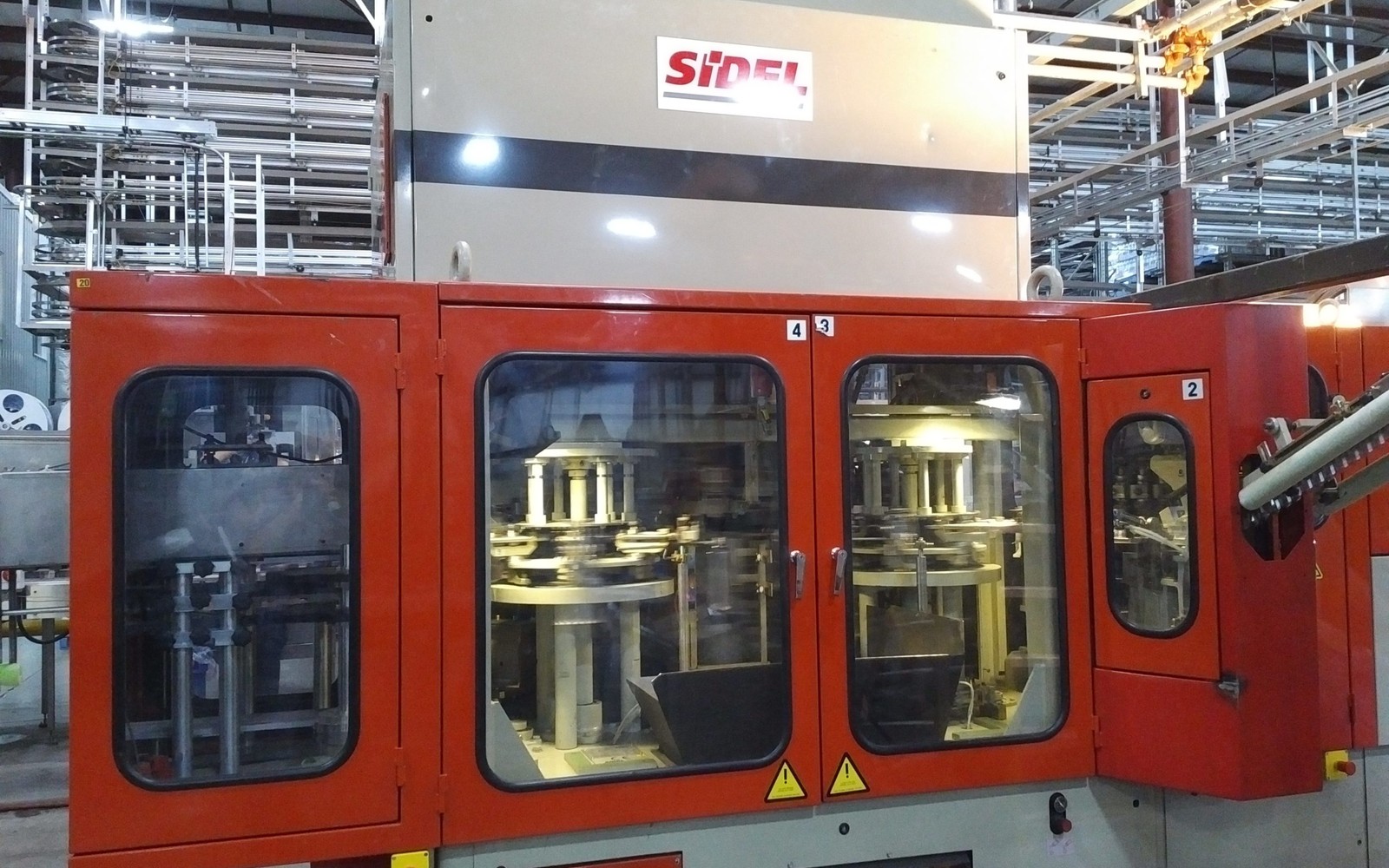
Sidel's blow-molding business centers on the SBO (Sidel Series) and Matrix platform. The Matrix blow-molder is their current flagship for high-speed PET production, capable of producing bottles in multiple formats at rates that match the throughput of integrated fillers. For a juice brand making a full line investment, the Matrix blow-molder typically sits immediately upstream of the filler, passing formed bottles by air conveyor directly to fill without storage in between. This eliminates the contamination risk of storing open empty bottles and reduces the space requirement versus a two-step layout with a bottle warehouse between blow-mold and fill.
On the filling side, Sidel's EvoFILL and FillerMatrix systems handle still and carbonated beverages across multiple closure types. For juice in particular, the EvoFILL isobaric system is relevant to producers of sparkling juice or juice-based drinks with added carbonation. For still juice, the EvoFILL monoblock works with the capping station to fill and close in one integrated step. These systems tie naturally into Sidel's labeling modules and end-of-line palletizers for a fully automated downstream flow.
Complete Sidel line packages for a mid-size juice manufacturer often total several million dollars. However, individual Sidel modules purchased separately, a used Matrix blow-molder, a standalone EvoFILL filler, or a labeling module from a decommissioned line, can come in at figures our financing handles directly. Used Sidel equipment from plant closures and capacity-reduction sales regularly appears on the secondary market, and the brand's strong maintenance ecosystem means refurbished units can deliver years of reliable production. Compare Sidel's full-line integration approach with the capabilities of Krones, which serves similar high-volume markets with different line architecture choices.
Financing Structure for a Sidel Investment
Sidel deals tend to fall into two categories for us. The first is the complete new line purchase where the buyer is a scaled juice or beverage manufacturer with the financial history to support a multi-million-dollar transaction. Those deals involve full financial documentation, a longer underwriting review, and a term that reflects the 15-to-20-year productive life of the equipment. We still handle these, but the process is different from an application-only deal. Existing Sidel owners who want to lower a payment or restructure debt on equipment already in service should look at equipment refinancing as a separate path.
The second and more common category for our pipeline is the partial line, the module purchase, or the used Sidel acquisition. A juice manufacturer buying a single used Matrix blow-molder at $200,000 to $400,000 to replace an aging system is a straightforward application-only deal for us: they apply, we review the business, and we fund within one to two weeks. Same with a producer buying a used EvoFILL filler from a broker or through a Sidel authorized refurbisher. These transactions are handled exactly like any other equipment financing with us: the machine is collateral, the business cash flow supports the payment, and we close fast.
Producers structuring a lease on Sidel equipment often choose a fair-market-value lease versus a dollar-buyout lease based on how they want to handle end-of-term options. The FMV lease carries a lower monthly payment and preserves the option to return the machine or buy at market value; the dollar-buyout is higher monthly but guarantees ownership. For capital-intensive Sidel equipment with long productive lives, many producers prefer the dollar-buyout for control over the asset.
New Versus Used Sidel for Mid-Scale Producers
Sidel's new equipment pricing puts full-line packages out of reach for most producers below 10,000 to 20,000 bottles per hour throughput targets. However, the secondary market for Sidel is active and global. Plant closures, line changeovers, and capacity reductions at large beverage manufacturers regularly bring Sidel modules onto the market at 30 to 50 cents on the new-equipment dollar. A juice manufacturer who can accept equipment in this price range and who has the technical team to commission a refurbished Sidel line can access high-quality PET capacity at a fraction of the new-line cost.
We finance used Sidel the same way we finance used equipment from any major beverage brand: we evaluate the machine's age, condition report, and market value, then structure a term and advance rate that reflects realistic residual. Sidel's service network and the availability of genuine spare parts through Sidel's aftermarket program are factors that help used machines hold value better than comparable equipment from less-supported brands. This is especially relevant for juice manufacturers who need confidence in parts availability over a multi-year ownership period.
Buyers sourcing used Sidel from a broker or an international seller (Sidel equipment frequently moves from European plants to North American buyers) sometimes need a bridge between the seller's payment timeline and their own financing close. We have experience handling international equipment purchases and can often structure funding that accommodates the logistics of cross-border transactions, including freight and customs in the financed amount where the total still qualifies.
Connecting Sidel Financing to Your Broader Line Investment
A Sidel PET line is only one component of a complete juice production facility. Upstream from the Sidel system sits raw material processing: washing, cutting, extraction. Downstream sits cold storage, distribution logistics, and potentially HPP treatment for shelf-stable products. Producers making a Sidel investment are almost always also investing in or already owning the upstream extraction and the downstream cold chain. We can finance the Sidel module alongside related equipment purchases in a single transaction if the timing lines up, or as separate transactions if the purchases are months apart.
For brands whose Sidel investment is part of a facility expansion that also includes a walk-in refrigeration system for finished goods and a high-pressure processing machine for shelf-life extension, coordinating the financing across all three assets early in the planning phase often produces a cleaner capital structure than financing them reactively. Come to us with the full equipment list and we can show you what a combined transaction looks like versus standalone financing for each piece.
Juice producers who are at the stage of evaluating a Sidel line investment are also at the stage where the financing decision shapes operational margins for years. A payment that is too heavy relative to projected bottle output can turn a technically successful line installation into a cash flow problem. We take the throughput target seriously when structuring the deal, not just the purchase price.
Let's Structure Your Sidel Deal
Sidel financing starts with the machine specification, the purchase price, and the business overview. Share what you are buying and we will come back with structure options that fit your throughput plan. No obligation to apply, and no time wasted on a deal that does not make sense. Tell us what you have.
Can I finance a Sidel line purchased from an overseas plant closure?
Yes, we have handled international equipment purchases on Sidel and other beverage brands. We can include freight, customs, and domestic installation in the financed amount as soft costs alongside the equipment purchase price, as long as the total transaction clears our minimum and the business qualifies. Let us know the seller country and logistics plan so we can structure the transaction correctly.
Sidel says my complete new line will be $3 million. Is that above what you finance?
A $3 million complete new line is in the range where full financial documentation is required and underwriting takes longer than our typical 1-2 week timeline. Those deals are still doable but involve a more detailed review. For used modules or partial line purchases in the $50k to $750k range, our standard application-only or light-documentation process applies.
I own a Sidel blow-molder outright. Can I do a sale-leaseback on it to fund a new filler?
Yes. Sidel equipment holds value well and is a good candidate for sale-leaseback if the machine is free and clear. We assess fair market value, structure the buyback payment, and you receive cash you can direct toward the new filler purchase. Both transactions can close around the same time.
Is a Sidel EvoFILL filler considered the same asset class as the blow-molder for financing purposes?
Both are classified as beverage manufacturing equipment and treated the same way by lenders. Whether you are financing a blow-molder, a filler, a labeler, or a palletizer from Sidel, the collateral category and eligible terms are essentially the same. We do not treat Sidel's individual machine types differently from each other.
My juice business is two years old but growing fast. Will you look at us for a Sidel deal?
Two years in operation with solid revenue growth is a good baseline. If the business bank statements show consistent monthly deposits that support the projected payment, and the Sidel purchase is sized to the actual throughput target rather than aspirational volume, we will take a serious look. Share the numbers and we will give you an honest read.
Related Financing Paths
Common Questions on Sidel Financing
Straight answers before you send the equipment file.
Can I finance a Sidel line purchased from an overseas plant closure?
Yes, we have handled international equipment purchases on Sidel and other beverage brands. We can include freight, customs, and domestic installation in the financed amount as soft costs alongside the equipment purchase price, as long as the total transaction clears our minimum and the business qualifies. Let us know the seller country and logistics plan so we can structure the transaction correctly.
Sidel says my complete new line will be $3 million. Is that above what you finance?
A $3 million complete new line is in the range where full financial documentation is required and underwriting takes longer than our typical 1-2 week timeline. Those deals are still doable but involve a more detailed review. For used modules or partial line purchases in the $50k to $750k range, our standard application-only or light-documentation process applies.
I own a Sidel blow-molder outright. Can I do a sale-leaseback on it to fund a new filler?
Yes. Sidel equipment holds value well and is a good candidate for sale-leaseback if the machine is free and clear. We assess fair market value, structure the buyback payment, and you receive cash you can direct toward the new filler purchase. Both transactions can close around the same time.
Is a Sidel EvoFILL filler considered the same asset class as the blow-molder for financing purposes?
Both are classified as beverage manufacturing equipment and treated the same way by lenders. Whether you are financing a blow-molder, a filler, a labeler, or a palletizer from Sidel, the collateral category and eligible terms are essentially the same. We do not treat Sidel's individual machine types differently from each other.
My juice business is two years old but growing fast. Will you look at us for a Sidel deal?
Two years in operation with solid revenue growth is a good baseline. If the business bank statements show consistent monthly deposits that support the projected payment, and the Sidel purchase is sized to the actual throughput target rather than aspirational volume, we will take a serious look. Share the numbers and we will give you an honest read.
Ready to Finance Sidel Financing?
Send the equipment quote, seller, transaction size, and target timing. The financing desk will review the package and return a clear next step.